Window Styles for Colonial Homes: A Guide to Getting the Details Right

Window Styles for Colonial Homes: A Guide to Getting the Details Right
Colonial architecture has been shaping American neighborhoods since the 1600s, and the windows are doing a lot of the heavy lifting in terms of curb appeal. If you're replacing windows on a colonial home or trying to figure out why the previous owner's choices look wrong the details matter more than you might expect. The symmetry, the grid patterns, the proportions: mess any of these up and the whole façade feels off, even if you can't immediately articulate why.
I've spent years writing about home exteriors, and colonial window replacements generate more reader questions than almost any other topic. People know something's not right with their windows but can't pinpoint the problem. Usually, it comes down to ignoring the architectural logic that makes colonial design work in the first place.
What Makes a Window "Colonial" in the First Place
Colonial-style windows aren't defined by a single window type. According to Adelphia Exteriors, a Maryland-based window company specializing in historic homes, "Colonial-style windows are usually placed symmetrically on the home's front façade on either side of the front door, and they often feature grids." The style is less about the specific window and more about arrangement, proportion, and those characteristic divided-light patterns.
Traditional colonial homes the ones built during the actual colonial period from roughly 1600 to 1780 feature a few consistent characteristics: two or three stories, a centered front door, steep side-gabled roofs, and windows arranged in strict bilateral symmetry. The windows themselves were almost universally double-hung, with multiple small panes held together by muntins (the wooden bars between glass panes). This wasn't an aesthetic choice originally; glass manufacturing limitations meant small panes were all that was available. But the look became synonymous with the style, and when Colonial Revival architecture surged in popularity during the late 19th and early 20th centuries, those multi-pane grids came back as a deliberate design element rather than a technical necessity.
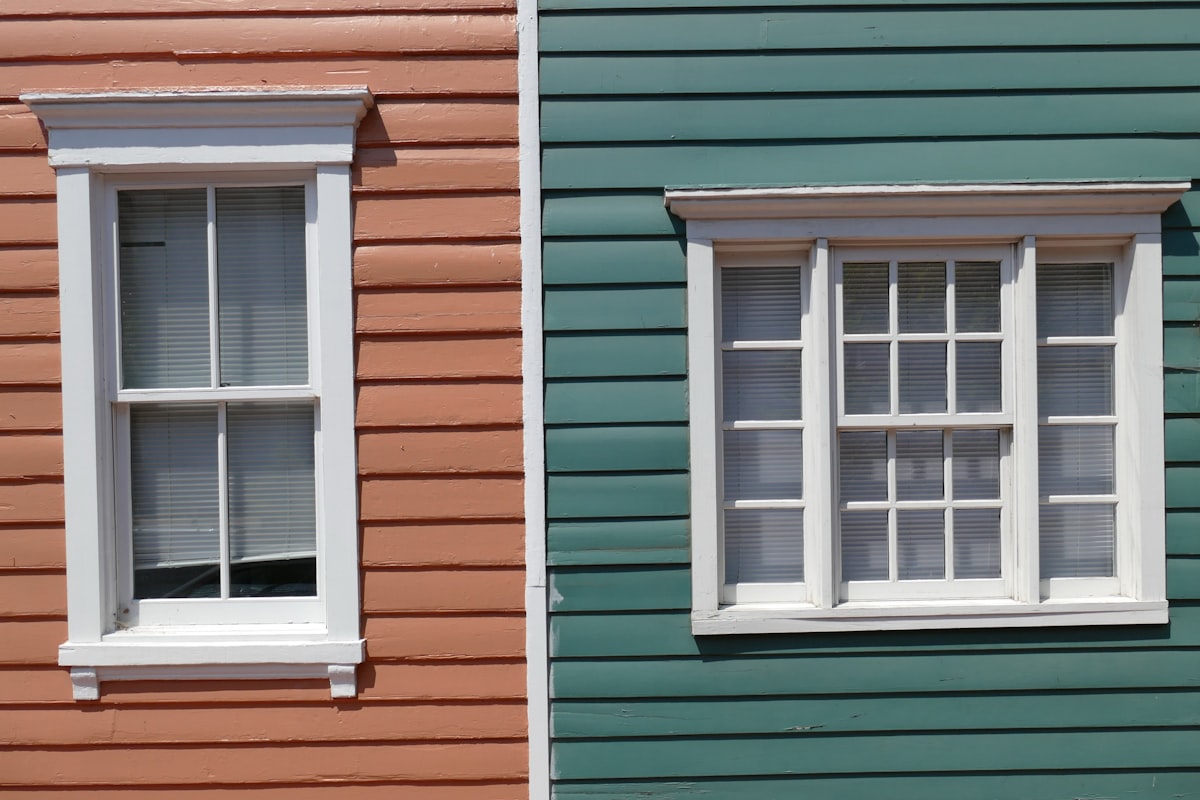
The typical colonial window arrangement places two windows evenly spaced on each side of the front door on the first floor, with three or five windows on the second floor one centered directly above the door. Heirloom Windows, which manufactures historically accurate wood windows, notes that colonial windows "are rectangular and evenly spaced across the front of the home" and "traditionally double-hung and multi-paned, with between nine or twelve panes per sash." That 6-over-6 configuration (six panes in the upper sash, six in the lower) is probably the most recognizable colonial window pattern, though 9-over-9 and 12-over-12 were also common depending on the region and era.
Double-Hung Windows: The Default Choice for Colonial Architecture
Double-hung windows dominate colonial architecture for good reasons beyond historical accuracy. The design two vertically sliding sashes that can both be opened emerged in 17th-century England, according to Crystal Glass, a Canadian window manufacturer that traces the style's evolution. Robert Hooke is credited with inventing the sash window mechanism, and the design spread rapidly to the American colonies where it became the standard for well over a century.
Both sashes moving independently offers practical ventilation advantages that casement windows (the hinged type that swings outward) can't match. Opening the top sash allows hot air to escape while the bottom admits cooler air, creating natural convection. This mattered enormously before air conditioning, and it still matters if you're trying to reduce energy costs during shoulder seasons. Historical Windows of New York, which specializes in landmarked building restoration, points out that double-hung windows "were popular in many architectural periods, from Colonial and Federal styles to Victorian townhouses and brownstones" a testament to how well the design works across different contexts.
For colonial homes specifically, the vertical orientation of double-hung windows complements the style's emphasis on height and formality. The proportions typically run taller than they are wide, often around a 2:1 height-to-width ratio, which reinforces the sense of stateliness that colonial architecture aims for. Single-hung windows (where only the bottom sash moves) can work as a budget alternative, though purists will note that the original colonial windows were almost always true double-hungs.
Grid Patterns and Muntin Styles That Actually Work
This is where most people go wrong.
The grid pattern on colonial windows isn't decorative afterthought it's arguably the most important visual element distinguishing authentic colonial style from generic replacement windows. Thompson Creek, a window company serving the Mid-Atlantic region, identifies colonial grids as "6-over-6, 9-over-9, or 12-lite patterns" that "maintain historical accuracy for traditional brick colonials, Cape Cod cottages, and similar styles." The numbers refer to the pane count in each sash: a 6-over-6 window has six panes in the upper sash and six in the lower.
Study.com's architecture curriculum defines muntins as "the wooden or metal bars that hold small panes of glass in place within a window, creating smaller panes called lights." In historic windows, these muntins were structural necessities. In modern windows, they're usually simulated through one of several methods: grilles between the glass (GBG), which sandwich a grid pattern between two panes of insulated glass; surface-mounted grilles that attach to the interior or exterior; or simulated divided lights (SDL), which add dimensional bars to both surfaces of the glass with a spacer bar between the panes for the most authentic appearance.
The choice matters more than you'd think. Flat grilles sandwiched between glass panes look obviously fake from certain angles because they lack the shadow lines that real muntins create. Surface-mounted grilles can work but tend to look cheap on higher-end homes. SDL systems cost more but cast realistic shadows and read as authentic from the street which is ultimately what you're paying for when you invest in historically appropriate windows.
I should note that I've never found reliable data on how much SDL versus GBG affects resale value on colonial homes specifically. Anecdotally, real estate agents in historic districts tell me it matters, but I haven't seen controlled studies. What I can say is that the wrong grid pattern is immediately visible, and once you notice it, you can't un-notice it.
Regional Variations Worth Knowing About
Not all colonial homes are identical, and the window choices should reflect the specific subtype you're working with. Georgian colonial, the most formal variety, typically features symmetrical 6-over-6 or 9-over-9 double-hung windows with pronounced trim and sometimes decorative headers. Dutch colonial homes recognizable by their gambrel roofs often used larger windows and sometimes incorporated fixed transoms above the main window units. Spanish Colonial Revival, common in Florida, California, and the Southwest, takes a different approach entirely; Andersen Windows notes that "the most common is the French casement window" in this style, with individual casement sashes rather than the double-hung windows typical of English-influenced colonial architecture.
Cape Cod homes, technically a colonial subtype, tend toward smaller windows with 6-over-6 grids, reflecting the style's origins as modest fishermen's cottages in Massachusetts. Federal-style homes, which emerged after American independence, often feature larger windows with thinner muntins and more elaborate trim than their colonial predecessors. Getting the grid pattern right for your specific colonial variant makes the difference between a renovation that looks intentional and one that looks like someone just picked whatever was on sale at the home improvement store.
What About Bay Windows, Palladian Windows, and Other Specialty Shapes?
Colonial architecture does accommodate some specialty window types, though they're less common than the standard double-hung units. Bay windows three windows angled outward from the wall appear in some colonial homes, particularly later Colonial Revival construction from the early 20th century. Quality Window & Door notes that bay windows work in colonial contexts when the individual units maintain the appropriate grid patterns and proportions. The center window is typically fixed (non-operating) while the flanking windows are operable double-hungs.
Palladian windows a large arched center window flanked by two smaller rectangular windows show up occasionally, usually as a focal point on the second floor centered above the front door. These are more common in Georgian and Federal styles than in earlier colonial construction, but they can work if the proportions are right. The key is ensuring the Palladian window doesn't overwhelm the façade or disrupt the symmetry that defines colonial design.
Round windows, sometimes called oculus or porthole windows, appear in some colonial homes, typically in gable ends or as accent elements. Hilton Architects, a firm specializing in traditional residential design, includes round windows among "typical colonial style windows" alongside double-hungs and Palladian configurations. These should be used sparingly one or two as accent elements, not scattered randomly across the façade.
Materials: Wood, Vinyl, Fiberglass, and the Authenticity Question
Original colonial windows were wood. There's no getting around this historical fact, and for homes in designated historic districts, wood may be the only option that preservation boards will approve. Wood windows offer unmatched authenticity, can be painted any color, and when properly maintained last for decades. The maintenance part is the catch: wood requires regular painting or staining, and rot is an ongoing concern in humid climates.
Vinyl windows cost less and require virtually no maintenance, but they look like vinyl windows. The profiles are typically thicker than wood, the colors are limited (and can't be painted), and the simulated muntins rarely achieve the shadow depth of real or high-quality SDL systems. For a colonial home where curb appeal matters, vinyl is a compromise that usually shows.
Fiberglass and composite materials offer a middle ground. These can be painted, they're more dimensionally stable than wood, and the better manufacturers produce profiles thin enough to approximate traditional proportions. Heirloom Windows emphasizes that their wood windows feature "custom millwork grids" that "meet contemporary performance and efficiency" a reminder that you don't necessarily have to sacrifice energy efficiency for historical accuracy. Modern wood windows with proper weatherstripping and insulated glass can perform comparably to vinyl alternatives while maintaining authentic appearance.
The honest answer on materials is that it depends on your budget, your maintenance tolerance, and whether your home is in a historic district with specific requirements. I've seen beautiful colonial renovations using fiberglass windows with SDL grids, and I've seen wood window installations that looked wrong because the proportions were off. Material matters less than getting the details right.
Color Considerations for Colonial Window Frames
White dominates colonial window frames for a reason: it was the standard during the actual colonial period, and it provides the crisp contrast against brick, clapboard, or painted siding that the style depends on. Cream and off-white variants work equally well, particularly on homes with warmer exterior paint colors. Black frames have become trendy in recent years, and while they can work on certain colonial homes particularly Georgian styles with dark shutters they're a departure from historical accuracy that should be approached carefully.
The Siding Group, which specializes in exterior renovations, notes that "neutrals such as whites and creams are common for Colonial window frames" and recommends matching frame colors to the home's existing trim. This is sound advice: the windows should integrate with the overall color scheme rather than standing out as separate elements. If your colonial home has painted wood trim in a specific off-white, matching the window frames to that exact shade creates visual cohesion that white-only options can't achieve.
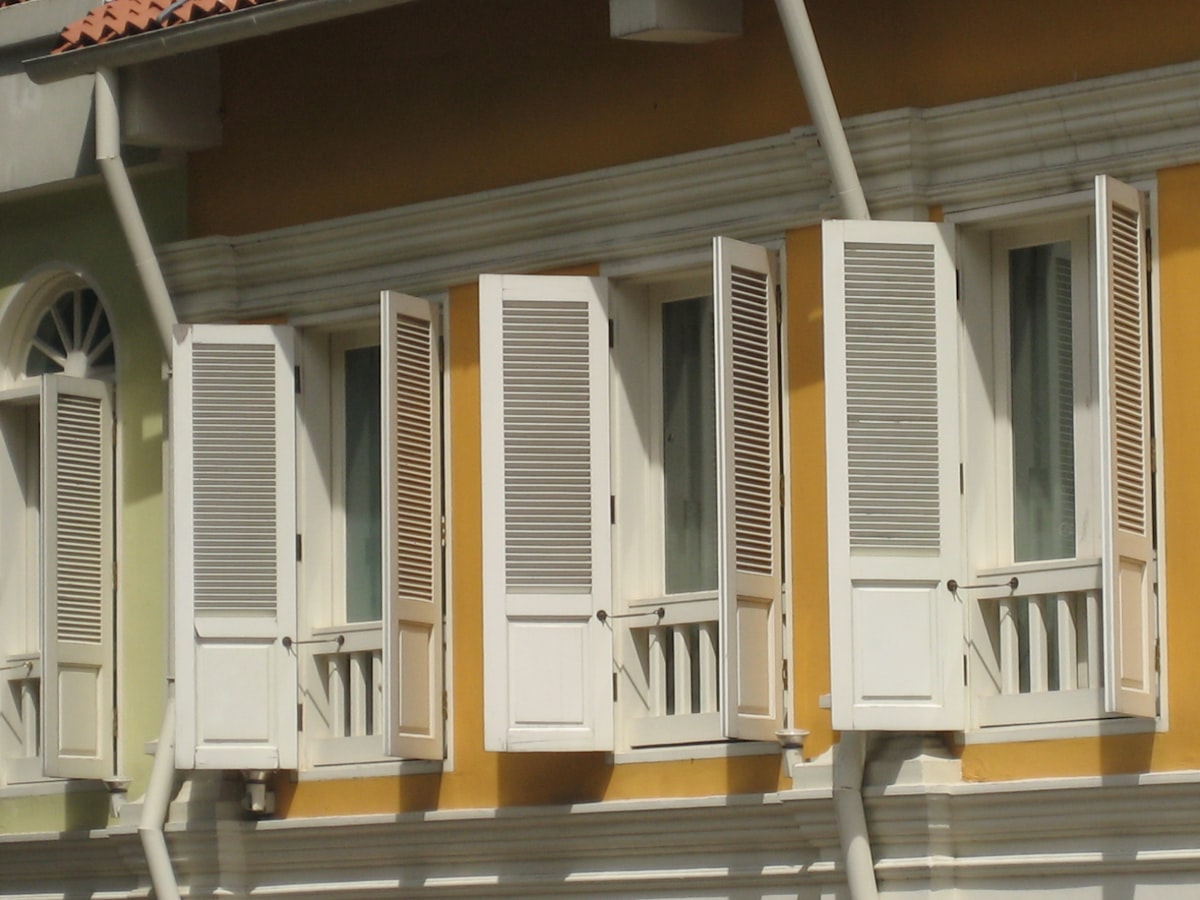
Shutters, if present, should coordinate with but not necessarily match the window frames. Traditional colonial shutters were functional they actually closed over the windows and were typically painted in darker colors (green, black, dark blue) to contrast with lighter frames. The shutter width should equal half the window width when closed, which is a detail that many modern decorative shutters get wrong.
Energy Efficiency Without Sacrificing Style
Modern replacement windows can achieve U-factors (a measure of heat transfer) below 0.30, compared to single-pane historic windows that might have U-factors above 1.0. The energy savings are real, and for homes in extreme climates, upgrading to insulated glass makes financial sense over time. The question is whether you can get those efficiency gains without compromising the colonial aesthetic.
The answer is generally yes, with caveats. Insulated glass units (IGUs) are slightly thicker than single-pane glass, which can affect how the window sits in the frame. Better manufacturers account for this in their designs, but cheaper windows may have noticeably different proportions. Low-E coatings, which reduce heat transfer, can sometimes create a slightly different reflectivity than clear glass usually not noticeable from the street, but visible in certain lighting conditions.
Triple-pane glass offers even better insulation but adds thickness and weight that can be problematic in colonial-style frames designed for thinner glass assemblies. For most climates, high-quality double-pane windows with low-E coatings represent the practical sweet spot between efficiency and authenticity.
Common Mistakes I See on Colonial Window Replacements
The errors tend to cluster around a few categories:
- Wrong grid pattern prairie-style grids (which frame only the perimeter of the glass) on a home that should have colonial 6-over-6 patterns
- Proportions that are too wide and squat rather than tall and narrow
- Grilles that are too thick or too thin for the window size, disrupting the visual balance
- Mixing window styles on the same façade casements on the first floor, double-hungs on the second
- Removing grids entirely to "modernize" a home that reads as colonial in every other respect
- Installing windows that are slightly different sizes, breaking the symmetry that defines the style
The symmetry issue deserves emphasis. Colonial architecture depends on balance, and windows that are even slightly misaligned or differently sized will make the entire façade look wrong. When replacing windows, measure carefully and verify that the new units will maintain the existing openings exactly. Resizing window openings on a colonial home is almost never a good idea unless you're correcting a previous mistake.
Working with Historic Districts and Preservation Requirements
If your colonial home is in a designated historic district, you may need approval before replacing windows. Requirements vary dramatically by jurisdiction some districts mandate wood windows with true divided lights, while others accept high-quality simulated alternatives. Historical Windows of New York notes that their work involves "ensuring compliance with preservation laws," which can include matching original window profiles, muntin dimensions, and even glass characteristics.
The approval process typically requires submitting detailed specifications and sometimes samples. Expect it to take longer than you'd like, and budget accordingly. The upside is that historic district requirements often push homeowners toward better-quality windows than they might otherwise choose, which tends to pay off in both appearance and longevity.
For homes not in historic districts, you have more flexibility but that doesn't mean anything goes. The neighborhood context matters. A colonial home surrounded by other colonials will look odd with contemporary window treatments, even if no regulations prevent them. The goal should be windows that look like they could have been original to the house, even if they're modern replacements with modern performance characteristics.
Choosing the Right Window Style for Your Colonial Home
Start by identifying your specific colonial subtype and researching the window patterns typical for that style. Take photos of well-preserved examples in your area historic districts often have homes that can serve as reference points. Pay attention to the grid patterns, proportions, and trim details, not just the general window type.
When shopping for replacement windows, bring those reference photos. Ask manufacturers about their SDL options and request samples you can hold up against your existing windows. The difference between a good simulation and a cheap one is immediately apparent when you see them side by side. Don't let a salesperson convince you that "nobody notices" grid quality people notice, even if they can't articulate what's wrong.
Budget for quality on the front-facing windows even if you need to economize elsewhere. The windows visible from the street have the biggest impact on curb appeal; rear-facing windows can sometimes accommodate more modest specifications without affecting the home's presentation. This isn't ideal from a purist perspective, but it's a practical compromise that many homeowners make successfully.
Colonial window styles have persisted for four centuries because the proportions and patterns work. The symmetry feels right, the grid patterns add visual interest without overwhelming, and the double-hung operation remains practical for everyday use. Getting the details right on a colonial window replacement isn't about slavish historical recreation it's about understanding why the original design works and ensuring your modern windows honor that logic.