Modern Home Decoration Lamp Matching Styles Guide: How to Layer Light Like a Designer

Modern Home Decoration Lamp Matching Styles Guide: How to Layer Light Like a Designer
Here's something I've learned after a decade of covering interior design: lighting is the element most homeowners get wrong, and it's usually because they're thinking about lamps as individual objects rather than as part of a system. A modern home decoration lamp matching approach isn't about buying a set of identical fixtures from the same collection it's about understanding how different light sources work together to create depth, function, and atmosphere in a room.
The global decorative lighting market tells an interesting story about how seriously people are taking this. According to Market.us, the sector is projected to reach USD 59.4 billion by 2033, up from USD 41.7 billion in 2023. That's a 3.6% compound annual growth rate driven largely by homeowners who've realized that good lighting transforms everything else in a space.
But spending more doesn't automatically mean lighting better. I've walked through plenty of expensive homes where the lighting felt flat, clinical, or just off usually because someone bought beautiful fixtures without thinking about how they'd function together.
The Three Layers Every Modern Lighting Scheme Needs
Professional interior designers approach lighting in layers, and once you understand this framework, lamp matching becomes much more intuitive. According to Decorilla, layered lighting breaks down into three essential types: ambient, task, and accent lighting, and the best rooms have all three working in concert.
Ambient lighting is your foundation the general illumination that lets you move through a space without bumping into furniture. This is typically your overhead fixtures: ceiling lights, chandeliers, or recessed cans. Task lighting is more directed, illuminating specific areas where you need to see clearly: reading nooks, kitchen countertops, bathroom vanities, home office desks. Accent lighting is the most specialized layer, bringing drama and focus to artwork, architectural details, shelving, or decorative objects you want to highlight.
The mistake most people make is stopping at ambient lighting and maybe adding a table lamp or two as an afterthought. A living room with only overhead light and a single lamp on an end table will always feel incomplete, no matter how expensive those fixtures are. The space lacks dimension because all the light is coming from similar heights and serving similar purposes. Ashley Diggelmann, a lead designer at Nandina Home Design, puts it this way: "Always evaluate the purpose of a room, but even more importantly, think about flexibility. In our ever-evolving floor plans, having multiple lighting sources lets you adjust the mood and function as life shifts throughout the day."
This is the key insight that changes how you approach lamp matching: you're not trying to make everything look the same. You're trying to make different types of light sources work together so you can control the atmosphere of a room depending on what you're doing in it. Watching a movie requires different lighting than hosting a dinner party, which requires different lighting than reading before bed. A well-layered room gives you those options without having to buy new fixtures every time your needs change.
Matching vs. Coordinating: Why Perfect Symmetry Falls Flat
The question I hear most often about lamps is whether they need to match. The short answer is no and in many cases, matching lamps actually makes a room feel less designed rather than more polished.
Interior designer Nadine Stay advises that when pairing multiple lamps in one room, you should pick lamps with different colors, shapes, shades, materials, and textures. A brown table lamp on one side of a sofa and a black floor lamp with an empire shade on the other makes the room less predictable. Both options matching or mismatching can work, but the mismatched approach tends to feel more collected and personal, like a room that evolved over time rather than one that was ordered from a catalog.
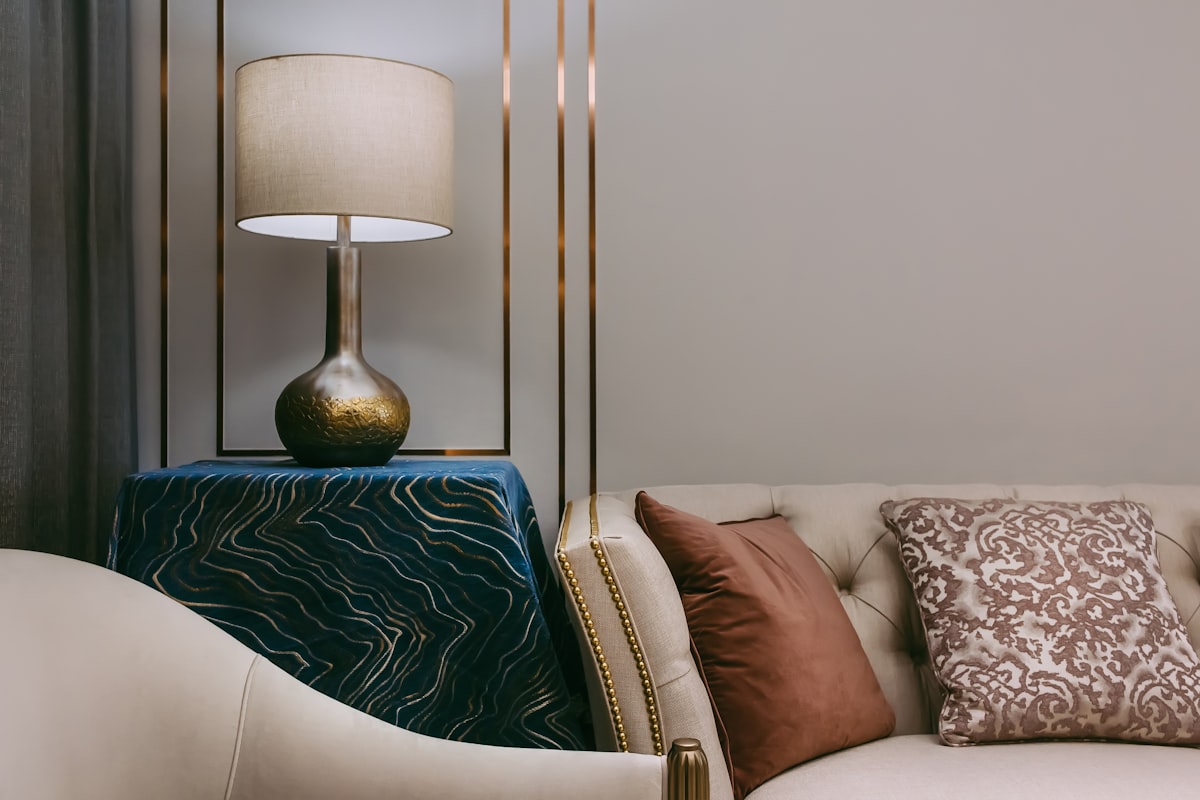
The trick is finding the through-line that connects your different fixtures. This might be a shared material (brass hardware on otherwise different lamps), a consistent shade color (white or cream shades across various base styles), or a complementary scale relationship (tall and slim paired with short and sculptural). You want enough visual connection that the lamps feel like they belong in the same room, but enough variation that the eye has something interesting to discover.
I'll be direct about this: matching lamp sets from furniture stores are the easy choice, and they're not wrong, but they're also not doing any heavy lifting for your design. If you want a room that feels considered and personal, you'll need to think harder about how pieces relate to each other without being identical.
Proportion Rules That Actually Matter
Lampshade proportion is where most people go wrong and it's one of the few areas where there are actual rules worth following. According to Ballard Designs' lampshade guide, your shade should be about two-thirds the height of your lamp base. Too tall and the effect becomes top-heavy; too short and the proportions look stunted.
Shape matters too. Round bases generally work best with round shades, while square or angular silhouettes tend to look better with square shades. Candlestick lamps are the exception their combination of curves and angles can handle just about any shade shape. And if your lamp is square but your table is round, a round shade can complement both, which is a useful trick for spaces where you're working with mixed furniture shapes.
The width of the shade relative to the base is another consideration. A good rule of thumb from Flower Magazine suggests the shade should be twice as wide as the base of the lamp. This creates visual stability and ensures the shade doesn't look like it's perching precariously on top of a too-wide base.
Room-by-Room Lamp Matching for Modern Spaces
Different rooms have different lighting demands, and your lamp matching strategy should reflect that. BethAnn Connor, another lead designer at Nandina, recommends thinking about kitchens as spaces that need the most layers: "We always recommend a mix overhead cans for general illumination, under-cabinet lighting for both task and ambiance, and pendants to bring in character and visual interest."
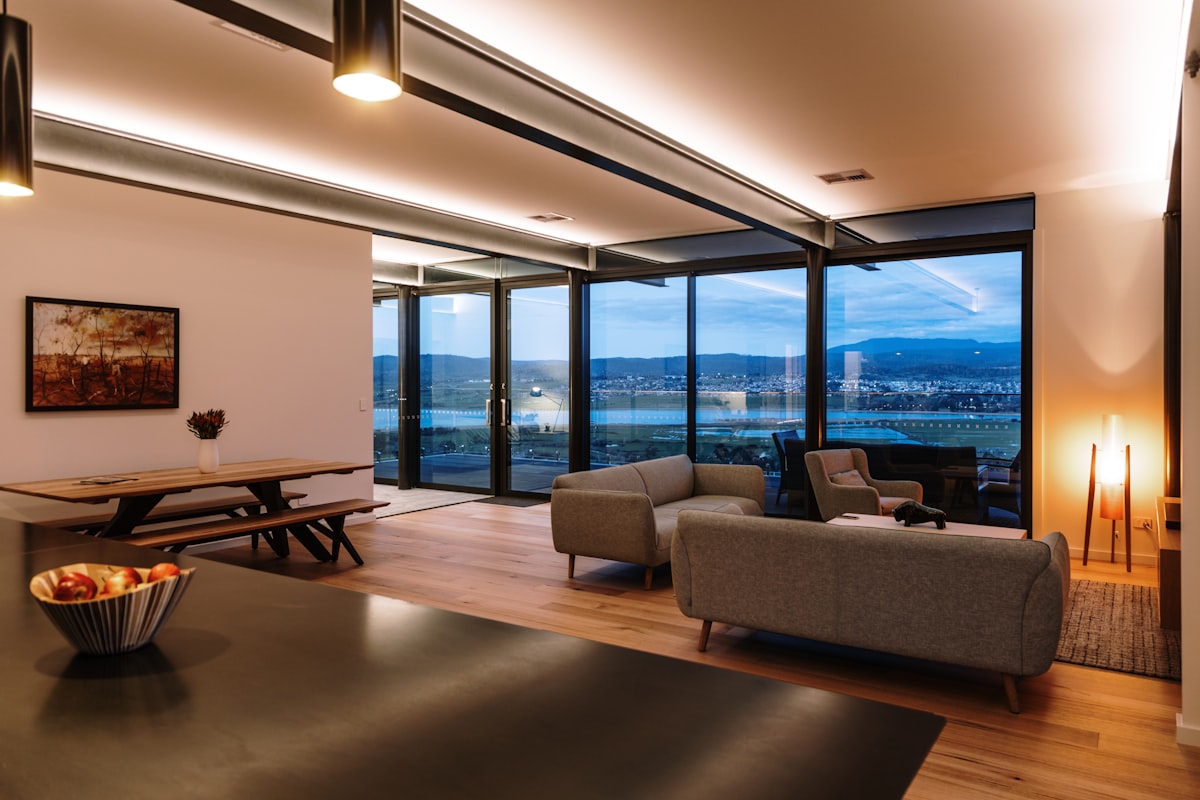
Living rooms benefit from the most variety in lamp heights and types. You want light sources at multiple levels: something at ceiling height (a chandelier, pendant, or recessed lighting), something at eye level when seated (table lamps on end tables or console tables), and something lower (floor lamps positioned behind or beside seating). This creates pools of light throughout the room rather than a single wash of illumination from above, which is what makes a space feel flat and uninviting after dark.
Bedrooms are where I see the most underlit spaces. People rely too heavily on a single overhead fixture and maybe a lamp on one nightstand. But bedrooms need task lighting for reading (adjustable wall sconces or bedside lamps with focused light), ambient lighting for general visibility (overhead or a floor lamp in a corner), and ideally some accent lighting if you have artwork or architectural features worth highlighting. The goal is to be able to wind down the light level as you get closer to sleep, which requires multiple sources you can turn off independently.
Home offices need the most task-focused approach. Your desk lamp is doing the heavy lifting here, so it needs to be positioned to minimize glare on screens while providing enough light for paper documents. A second light source a floor lamp or table lamp elsewhere in the room prevents the harsh contrast between your brightly lit desk and a dark surrounding space, which causes eye strain over long working sessions.
Modern Lamp Styles Worth Knowing
The 2024 and 2025 trends in modern lighting lean toward what designers are calling "modern traditional" fixtures with clean lines and traditional shapes rendered in simple neutral colors and materials. According to Knikerboker, an Italian lighting design company, minimalism remains strong but with a touch of refinement: pendant lights featuring clean lines and simple designs in materials like brushed metal, clear glass, and natural wood.
This is actually good news for lamp matching because these transitional styles play well with both contemporary and traditional furniture. A brushed brass table lamp with a simple drum shade works equally well in a mid-century modern living room and a more traditional space with upholstered furniture and patterned textiles.
The high-end lighting market, valued at USD 20.26 billion in 2024 according to GM Insights, is growing at 7.7% annually, driven partly by demand for statement fixtures that double as sculptural objects. If you're going to invest in one showpiece lamp, this is the fixture that can break the matching rules entirely something unexpected that becomes a conversation piece while your other lamps handle the functional lighting.
LED Technology and What It Means for Matching
The shift to LED lighting has changed lamp matching in ways that aren't immediately obvious. According to research from Lawrence Berkeley National Laboratory, 47% of US households now mostly use LEDs in their homes, up dramatically from just a few years ago. This matters for matching because LED bulbs come in a much wider range of color temperatures than incandescent bulbs did, and mismatched color temperatures are one of the fastest ways to make a room feel off.
If one lamp casts warm, yellowish light (around 2700K) and another casts cool, bluish light (4000K or higher), your eye will notice the discrepancy even if you can't articulate what's wrong. When matching or coordinating lamps, make sure you're using bulbs with the same color temperature across all fixtures, or at least within the same general range.
For most residential spaces, 2700K to 3000K creates the warm, inviting atmosphere people associate with comfortable homes. Save the cooler temperatures for task lighting in home offices or garages where you need alertness more than ambiance.
Common Matching Mistakes I Keep Seeing
The biggest mistake is what I'd call "matchy-matchy syndrome" buying a living room set where every lamp is identical, every shade is the same, and every fixture comes from the same collection. This reads as safe rather than stylish, and it eliminates the visual interest that comes from thoughtful variation.
The second most common mistake is ignoring scale relationships. A tiny table lamp on a large console table looks lost; an oversized floor lamp in a small room dominates the space. Before buying any lamp, measure both the lamp and the surface or area where it will live, and make sure the proportions make sense.
Third: forgetting about the light itself. Some lampshades are opaque and direct all light downward; others are translucent and glow from within. If you're mixing shades, pay attention to how they'll look when lit, not just when they're off. A room with one glowing shade and several opaque ones will feel unbalanced after dark.
I couldn't find reliable data on how many homeowners make these specific mistakes, which is a gap in the research that someone should address. Most of what we know about common lighting errors comes from designers' anecdotal experience rather than systematic study.
Putting It Together: A Practical Matching Approach
Start by identifying what each lamp needs to do. Map out your room and note where you need task lighting, where you want ambient fill, and where accent lighting would add drama. This functional analysis tells you what types of lamps you need before you start thinking about style.
Next, pick one element to keep consistent across your lamps. This might be shade color (all white or cream), hardware finish (all brass or all black), or general style family (all mid-century inspired, all traditional). This becomes your visual thread.
Then vary everything else. Different base shapes, different heights, different shade styles within your chosen color family. The consistent element keeps the room feeling cohesive; the variation keeps it interesting.
Finally, test your lighting at night before committing. Live with your lamp arrangement for a few evenings and pay attention to how the room feels. Are there dark corners that need filling? Is any area too bright? Can you create different moods by turning different combinations on and off? Adjust until the lighting serves how you actually use the space.
A modern home decoration lamp matching approach ultimately comes down to understanding that lamps are tools for shaping how a room feels, not just decorative objects to fill empty surfaces. When you match with intention thinking about function, proportion, and the relationships between different light sources you end up with spaces that feel designed without feeling decorated, and that's the difference between a room that looks good in photos and one that actually feels good to live in.