What Are Spanish Style Homes? Architecture, Design Elements, and Inspiration

What Are Spanish Style Homes? Architecture, Design Elements, and Inspiration
Spanish style homes are among the most immediately recognizable residential architectural forms in the United States and one of the most consistently misunderstood. Ask most people to describe one and they'll say "red roof, white walls." That's not wrong, but it barely scratches the surface of a tradition that spans five centuries, three continents, and at least four distinct regional sub-styles. If you've ever stood in front of a California bungalow with a terracotta roof and wondered exactly what you were looking at, this is the piece for you.
At their core, Spanish style homes draw from the architecture that Spanish colonizers brought to the Americas beginning in the 16th century blending Iberian building traditions with Moorish influences absorbed during centuries of Islamic presence in Spain, then filtered again through the practical demands of hot, dry climates in Florida, California, and the American Southwest. The result is a style that is simultaneously ancient and remarkably liveable by modern standards.
The Historical Roots of Spanish Style Architecture
To understand Spanish style homes in America, you have to go back to the period between the 16th and mid-19th centuries, when Spain was the dominant colonial power across much of the Americas. The regions that Spaniards settled most heavily Florida, California, Texas, New Mexico, Arizona share a temperate, semi-arid climate very similar to the Iberian Peninsula. So the houses that colonizers built weren't just cultural transplants; they were genuinely practical responses to the environment. Thick stucco walls kept interiors cool. Interior courtyards the patio created shaded, ventilated outdoor living space. Terracotta roof tiles shed rain efficiently and stayed cool in intense sun.
The Moorish thread running through Spanish architecture is worth pausing on. Spain's Moorish period lasted roughly 800 years, from the 8th century through the fall of Granada in 1492, and its architectural influence never fully left. The horseshoe arches, geometric tile patterns, and fountain-centred courtyard layouts that define so much of what we call "Spanish style" are actually Andalusian-Moorish in origin, absorbed into Spanish building culture and then carried across the Atlantic. When you see a hand-painted ceramic tile border in a California hacienda, you're looking at a design lineage that runs through Seville back to North Africa.
The formal architectural movement known as Spanish Colonial Revival emerged in the early 20th century, particularly after the 1915 Panama-California Exposition in San Diego, where architect Bertram Goodhue designed the grounds in an elaborate Spanish Renaissance style that captivated the American public. The style exploded across California and Florida through the 1920s and 1930s, producing everything from modest bungalows to grand estates. Flagler College in St. Augustine, Florida originally the Ponce de León Hotel, built in 1888 remains one of the most photographed examples of the style's grandeur, though it predates the formal Revival movement by a generation.
Defining Features of Spanish Style Homes: What to Look For Outside
The exterior of a Spanish style home is where the style announces itself most clearly, and there are several elements that appear consistently across regional variations.
The stucco exterior is perhaps the most universal marker. Traditional Spanish style homes use smooth, painted stucco typically in white, warm cream, or soft ochre applied over adobe, stone, or more modern concrete block construction. The finish is intentionally plain; ornamentation in this style comes from architectural forms and decorative details, not from the wall surface itself. You won't find elaborate carved stonework or brick patterning on a genuinely Spanish style facade the way you would on a Victorian or Tudor home.
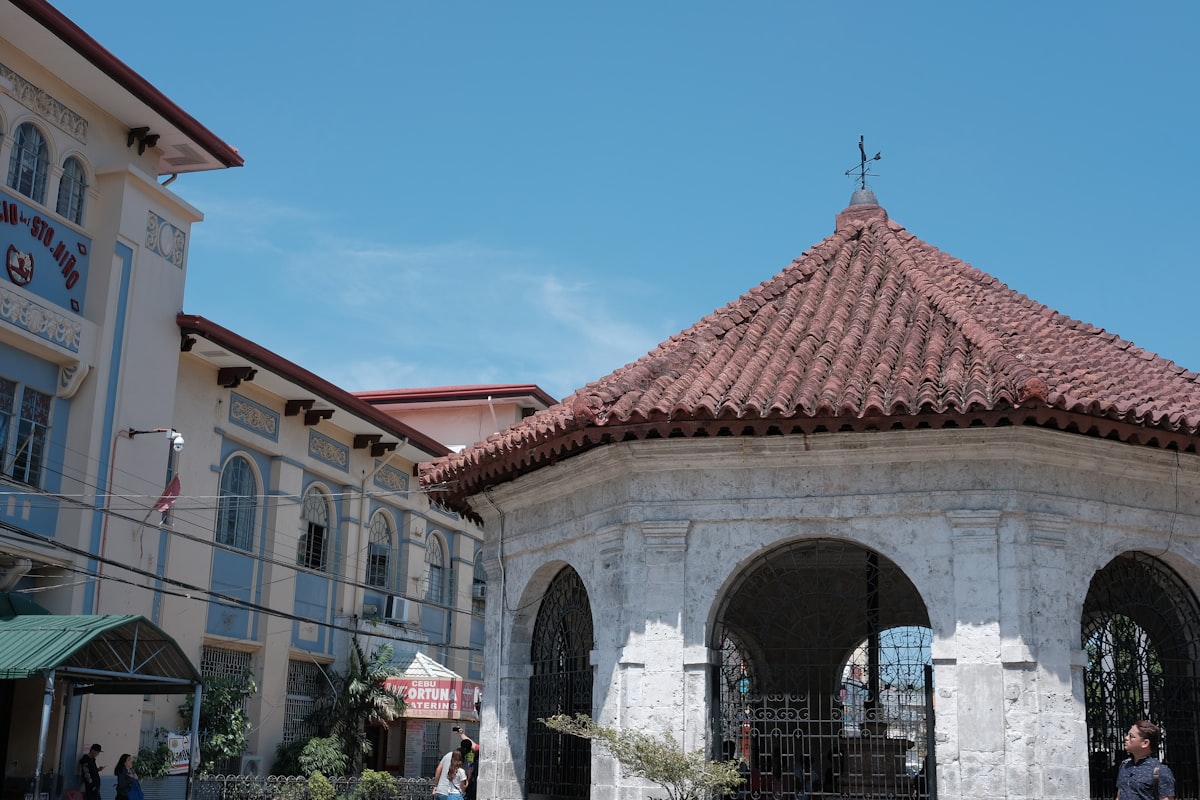
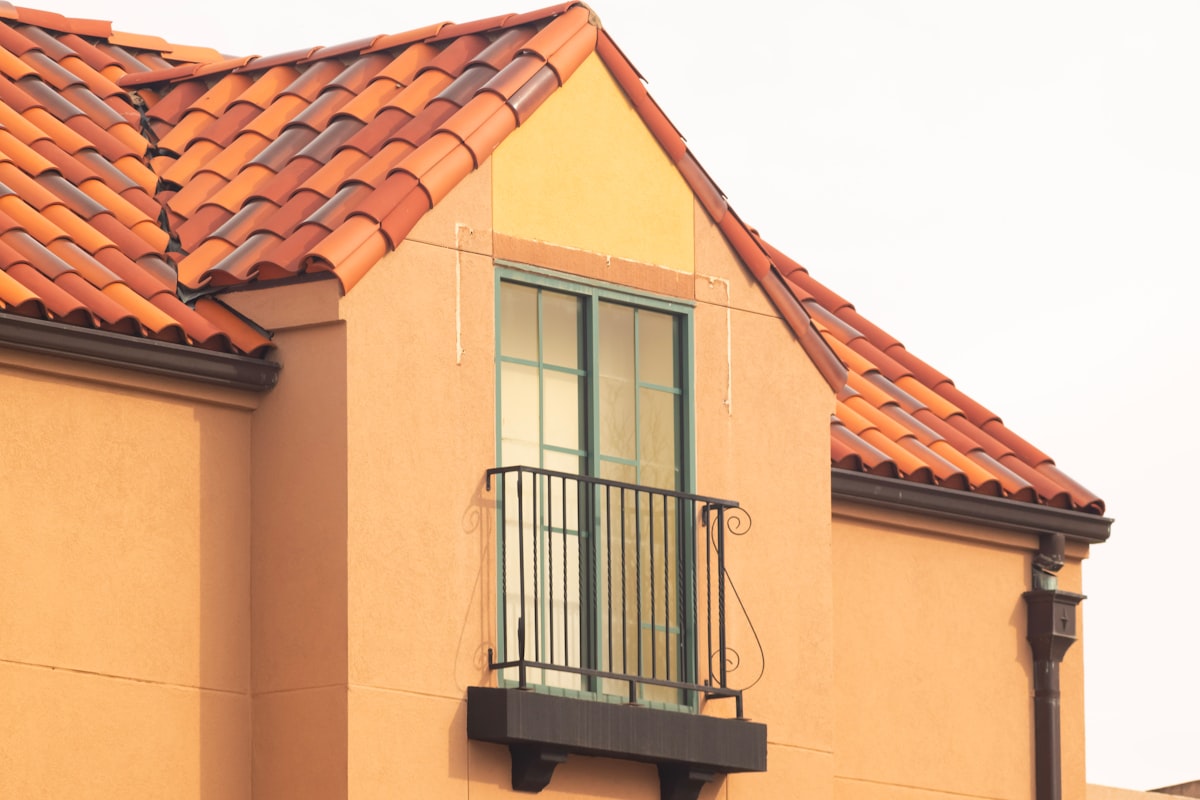
The roof is equally defining. Spanish style homes almost universally feature barrel-shaped clay tiles the distinctive S-curve profile that creates that undulating terracotta surface in warm earth tones ranging from deep rust to pale orange. These aren't merely decorative. The barrel tile system creates an air gap that provides natural insulation, a feature that made it ideal for hot climates long before air conditioning existed. Low-pitched hip roofs or shallow gabled roofs are standard; steep pitched rooflines are a European Gothic or Tudor signature, not a Spanish one.
Arched openings are everywhere: front doorways, window surrounds, covered walkways, and the colonnaded arcades that often wrap around interior courtyards. The arch form in Spanish Colonial architecture tends toward the semicircular Roman arch rather than the pointed Gothic arch, though Moorish-influenced horseshoe arches appear in more ornate examples. Heavy wooden doors typically dark-stained, plank-style, with hand-forged iron hardware complete the entrance composition and signal the weight and permanence that the style is built around.
Wrought iron appears on window grilles, balcony railings, light fixtures, and door hardware. In authentic examples, this ironwork is hand-forged with organic, slightly irregular details the opposite of the mass-produced cast iron that gets substituted in lesser interpretations of the style. Balconies, when present, are typically small and decorative rather than functional, projecting just enough to cast a shadow and break the wall plane.
Landscaping in Spanish style properties traditionally favours drought-tolerant plants bougainvillea, olive trees, lavender, agave arranged around a central courtyard or patio rather than the expansive front lawn typical of American suburban development. The courtyard itself, enclosed by the house or by low walls, is considered an extension of the interior living space, often centred on a fountain or water feature. This inward-facing orientation is one of the style's most distinctive spatial qualities: Spanish style homes tend to present a relatively closed face to the street while opening dramatically to a private outdoor space at their core.
Inside a Spanish Style Home: Materials, Colour, and Atmosphere
Step through that heavy wooden door and the material palette shifts from the bright exterior into something warmer and more textured. Spanish style interiors are built around natural materials stone, clay, wood, hand-worked iron and a colour palette that stays within the earth tones: terracotta, warm white, deep ochre, dusty sage, and the occasional burst of cobalt or turquoise from decorative tilework.
Floors are one of the first things you notice. Saltillo tile large, handmade terracotta pavers from the Mexican state of Coahuila is the quintessential Spanish style floor material, prized precisely because no two tiles are identical. The variation in colour and texture, ranging from pale salmon to deep rust, gives floors a warmth that no manufactured product quite replicates. Stone and cobble floors appear in more rustic or hacienda-influenced examples. Wide-plank hardwood is also used, particularly in Spanish Revival homes of the 1920s, though it reads as slightly less authentic to the tradition than tile.
Exposed wooden ceiling beams vigas are nearly non-negotiable in a Spanish style interior. In traditional construction, these were structural elements: heavy timber beams spanning the room, sometimes resting in carved stone corbels at the wall. In modern Spanish style homes, they're often decorative additions, but the visual effect is the same: they lower the perceived ceiling height, create a sense of enclosure and warmth, and add horizontal rhythm to the room. Painted or whitewashed ceilings between the beams, sometimes with subtle stencilled patterns, are a common refinement.
Talavera tile the hand-painted ceramic tradition brought from Spain to Mexico in the 16th century is the decorative jewel of Spanish style interiors. You'll find it as kitchen backsplash, bathroom surround, stair risers, fireplace facing, and built-in furniture inlays. The traditional Talavera palette runs to cobalt blue, yellow, green, and orange on a white ground, with geometric and floral patterns derived from both Spanish and indigenous Mexican sources. Used sparingly, a band of Talavera tile can animate an otherwise plain stucco wall. Used generously, it creates the kind of maximalist richness associated with grand Mexican haciendas.
Walls in Spanish style homes are typically thick a practical legacy of adobe and stone construction and finished in smooth or lightly textured plaster. Niches cut into walls for displaying religious figures, pottery, or decorative objects are a traditional feature that also makes good functional sense in a thick-walled house. Wrought iron wall sconces and pendant light fixtures continue the metalwork theme from the exterior, often with amber glass or candlelight-mimicking bulbs that reinforce the warm, slightly dramatic atmosphere the style is known for.
Furniture in a well-executed Spanish style interior tends toward the substantial: dark-stained hardwood pieces with visible joinery, leather upholstery in cognac or deep burgundy, and upholstered pieces in natural linen, cotton, or wool in muted earth tones. The aesthetic is comfortable but not casual there's a formality to the proportions that reflects the style's roots in colonial grandeur, even when the overall effect is relaxed and lived-in.
Spanish Colonial, Spanish Revival, and Hacienda: Understanding the Sub-Styles
One source of confusion when researching Spanish style homes is that several related but distinct architectural categories often get lumped together under the same label. The distinctions matter if you're trying to be specific about what you're buying, restoring, or designing.
Spanish Colonial refers to architecture built during the actual period of Spanish colonial rule, roughly 1565 (the founding of St. Augustine, Florida) through the early 19th century. These are the oldest examples, and they tend to be simpler and more austere than later interpretations practical buildings that used whatever local materials were available, with ornament reserved for churches and government buildings.
Spanish Colonial Revival is the early 20th-century American movement that romanticized and elaborated on those colonial precedents. This is what most people picture when they think of Spanish style homes in California: the 1920s and 1930s houses with elaborate tile work, ornamental iron, and red-tiled roofs that still dominate neighbourhoods from Santa Barbara to Coral Gables. The style was deliberately theatrical architects like George Washington Smith in Santa Barbara and Addison Mizner in Palm Beach created a vision of Spanish heritage that was frankly more glamorous than the original.
Mission Revival draws specifically from the Franciscan missions built along the California coast from the late 18th century, emphasizing curved parapet gable ends, arcaded walkways, and bell towers. It's slightly more restrained than Spanish Colonial Revival and was particularly popular in institutional and commercial architecture.
Hacienda style is more closely associated with the grand rural estates of Mexico and the American Southwest sprawling, single-storey or low-rise compounds built around a central courtyard, with a strong emphasis on the relationship between indoor and outdoor space. Hacienda interiors tend toward the rustic and the handmade, with heavier use of rough-hewn wood, hand-thrown pottery, and woven textiles.
In practice, most homes described as "Spanish style" draw from two or more of these traditions simultaneously, and the boundaries between them are genuinely blurry. I've never found a reliable source that draws a clean line between what qualifies as Spanish Colonial Revival versus Hacienda when applied to a private residence rather than a historic building and I'm not sure that line is worth drawing for most homeowners.
Where Spanish Style Homes Are Most Common
The geographic concentration of Spanish style homes in the United States follows the map of Spanish colonial settlement almost exactly. California has the highest density, particularly in Southern California Los Angeles, Santa Barbara, San Diego, and the communities of the San Fernando Valley are full of Spanish Revival homes from the 1920s building boom. The city of Santa Barbara is probably the most coherent example of Spanish Colonial Revival urbanism in the country; after a 1925 earthquake destroyed much of the downtown, the city rebuilt almost entirely in the style, creating an architectural consistency that remains intact today.
Florida's Spanish style concentration is centred on the older coastal communities: St. Augustine (the oldest continuously occupied European settlement in the continental US), Miami's Coral Gables neighbourhood master-planned by George Merrick in the 1920s with strict Spanish Mediterranean design standards and the Gulf Coast communities developed during the same era. The Southwest New Mexico, Arizona, Texas has its own regional variant that blends Spanish Colonial with Pueblo Revival and indigenous Adobe traditions, producing a earthier, more monochromatic aesthetic than the white-and-terracotta California version.
Bringing Spanish Style Into a Modern Home
The appeal of Spanish style design for contemporary homeowners is partly about aesthetics and partly about something harder to name a sense of permanence, of craft, of a building that was made to last rather than assembled from components. That quality is achievable in new construction and renovation, but it requires attention to materials rather than just surface finishes.
The single most impactful change you can make to an interior aiming for Spanish style is the floor. Genuine Saltillo tile, properly sealed and maintained, transforms a room in a way that ceramic imitations don't the variation in colour and the slight irregularity of the surface read as authentically handmade in a way that even the best digital-print tiles can't replicate. If Saltillo isn't practical (it requires careful sealing and isn't ideal for very cold climates without underfloor heating), large-format terracotta-effect porcelain in warm rust tones is a reasonable substitute, though you lose some of the character.
Exposed beams, whether structural or applied, are the second highest-impact intervention. Stained dark walnut or ebony and installed at regular intervals across a white or cream ceiling, they shift a room's atmosphere dramatically. The key is proportion: beams that are too thin look decorative in the wrong way, too obviously applied. Aim for a profile that looks like it could actually be holding something up.
For walls, the Spanish style palette rewards restraint in the base tone warm white, soft cream, pale terracotta and boldness in the accents. A band of hand-painted Talavera tile around a kitchen window or along a bathroom vanity does more for the aesthetic than painting the entire room a saturated colour. Wrought iron hardware throughout door handles, cabinet pulls, light fixtures creates the metallic continuity that holds the look together without requiring a full architectural renovation.
Textiles matter more than many people expect. Woven wool or cotton throws in geometric patterns, leather cushions on upholstered seating, and linen curtains in natural or warm white all reinforce the material honesty that defines the style. The thing to avoid is the overly polished, overly coordinated look Spanish style interiors have always had a slightly improvised quality, as though the house accumulated its furnishings over generations rather than being installed by a designer on a single project. That quality is genuinely difficult to manufacture on purpose, but it's worth keeping in mind as a corrective when a room starts to feel too curated.
One question I haven't been able to fully resolve from any of the sources I've reviewed: how much of what's sold as "Spanish style" furniture in the US market is actually produced using traditional joinery and solid hardwood versus veneered MDF with applied decorative details. The difference matters significantly for longevity and for the tactile quality that gives the style its character. If you're investing in pieces meant to anchor a Spanish style interior, it's worth asking that question directly of the retailer and being sceptical of anything priced well below what genuine hardwood construction would cost.
Why Spanish Style Homes Remain Relevant
Spanish style architecture has been declared finished and then revived so many times that the cycles themselves have become a story. The 1920s boom gave way to the stripped-down modernism of the postwar period, which gave way to a postmodern rediscovery in the 1980s, which has now given way to what House Beautiful described as a "major moment" for Spanish Revival in the mid-2020s driven partly by a broader cultural appetite for warmth, craft, and historical depth after years of minimalist interiors dominated by white walls and grey floors.
There's a practical argument for the style's durability, too. Spanish style homes were engineered for hot, dry climates long before mechanical cooling existed, and their passive design strategies thermal mass from thick stucco walls, shaded courtyards, cross-ventilation through the central patio are increasingly relevant as climate patterns shift. A well-built Spanish Colonial Revival home in California or Arizona is, in a meaningful sense, better adapted to its environment than a glass-and-steel modernist box built in the same location.
For anyone drawn to Spanish style homes whether you're buying, building, or simply decorating the most useful frame is to think of it not as a style to be applied but as a building tradition to be understood. The materials, the proportions, the relationship between indoor and outdoor space: these aren't aesthetic choices so much as solutions to specific climatic and cultural problems. When the details feel right in a Spanish style home, it's usually because someone understood those solutions rather than just copying the surface.