Thanksgiving Table Decor: Designer-Backed Ideas That Actually Work

Thanksgiving Table Decor: Designer-Backed Ideas That Actually Work
There's a particular kind of panic that sets in around mid-November. The turkey's ordered, the pies are planned, and then you look at your dining table and realize it still has last week's mail on it. Setting a Thanksgiving table that feels festive but not fussy, personal but not chaotic that's the real challenge of the holiday, and it tends to get far less attention than the menu.
Thanksgiving table decor has become its own cottage industry, with Pinterest boards stretching into the thousands and retailers pushing everything from artisanal gourd arrangements to $200 linen napkins. According to the National Retail Federation, Americans plan to spend an average of $890.49 per person this holiday season on gifts, food, decorations, and seasonal items the second-highest figure in the survey's 23-year history. Some of that money goes toward table settings, and a lot of it gets wasted on pieces that look good in a catalog but awkward in a real dining room.
Natural Elements Beat Manufactured Charm Every Time
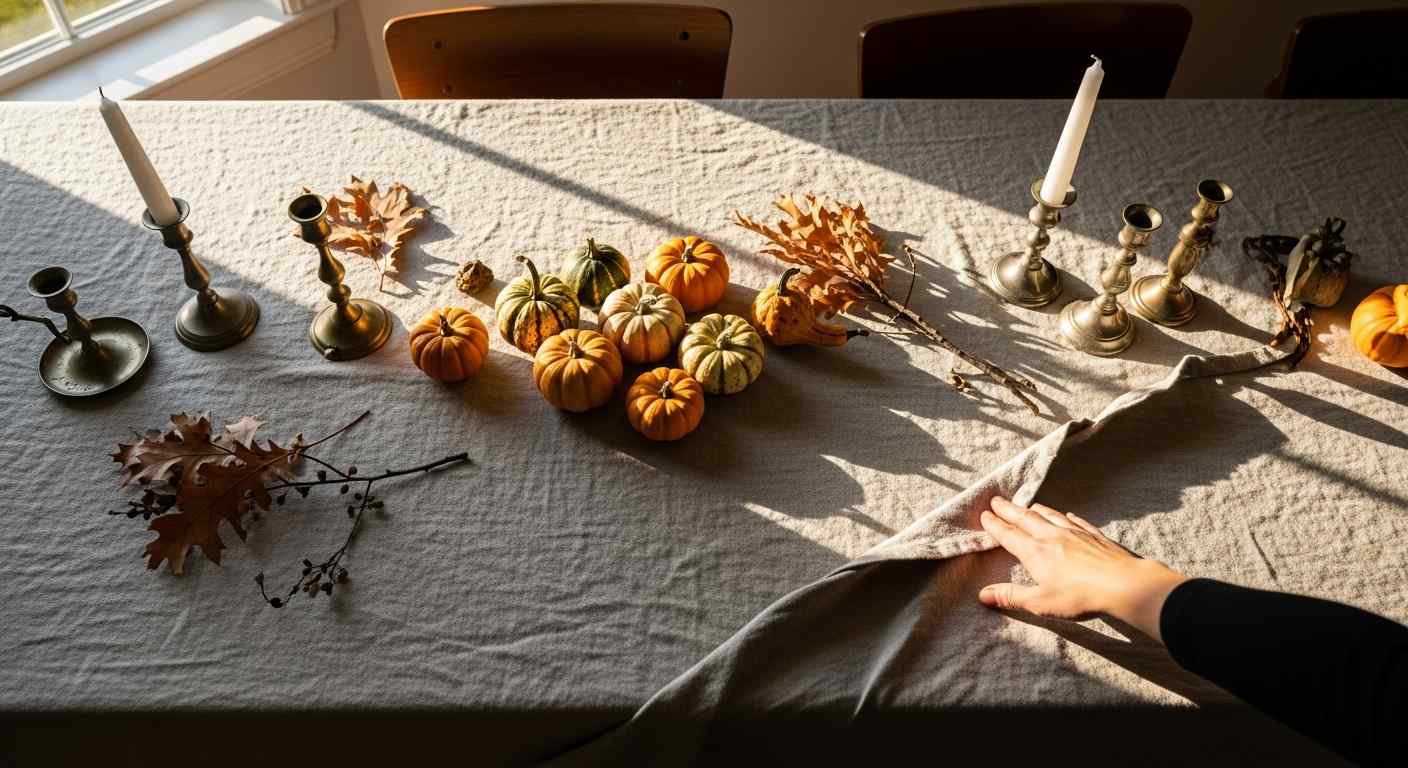
Anastasia Casey, editorial director of the Interior Collective, puts it simply: "The key to a great fall tabletop addition is to focus on natural elements and texture." This isn't just aesthetic preference it's practical advice. Foraged branches, scattered leaves, small pumpkins, and gourds from your local farmers' market cost a fraction of what retailers charge for synthetic versions, and they actually look like they belong on a table where people are about to eat a harvest meal.
The most successful Thanksgiving tables I've seen in recent years share a common thread: they look gathered rather than purchased. A wooden cutting board repurposed as a charger. Mismatched candlesticks collected over years. Cloth napkins that have seen better days but carry history. This approach works because Thanksgiving is fundamentally about abundance and gratitude, not perfection, and a table that looks too curated can feel cold when the whole point is warmth.
That said, I couldn't find reliable data on whether "natural" tablescapes actually cost less than retail alternatives most design blogs assume this without evidence, and my own experience suggests the farmers' market can get expensive fast if you're buying enough mini pumpkins to line a ten-person table.
The Case for Breaking with Traditional Colors
Event planner Bronson van Wyck, who has built a reputation organizing high-profile celebrations, offers a counterintuitive suggestion: "Instead of predictable warm browns and oranges, opt for indigo, aubergine, emerald, or bordeaux. Rich jewel tones capture the season's essence without falling into clichés."
This tracks with what Crate & Barrel and other major retailers are pushing for 2025 tonal elegance, Regency-inspired touches, and color palettes that wouldn't look out of place at a winter dinner party. The shift makes sense when you consider that most Thanksgiving hosts are also preparing for December holidays, and a table that transitions from November to Christmas without a complete overhaul saves both money and storage space.
Still, there's nothing wrong with orange.
Traditional fall colors became traditional for a reason: they echo what's actually happening outside, they complement the food being served, and they trigger deep seasonal associations that most people find comforting. The design world's current pivot toward unexpected hues is partly genuine innovation and partly the eternal need to sell something new. If your grandmother's burnt-orange tablecloth makes you happy, use it.
Place Settings: The Foundation Most People Overlook
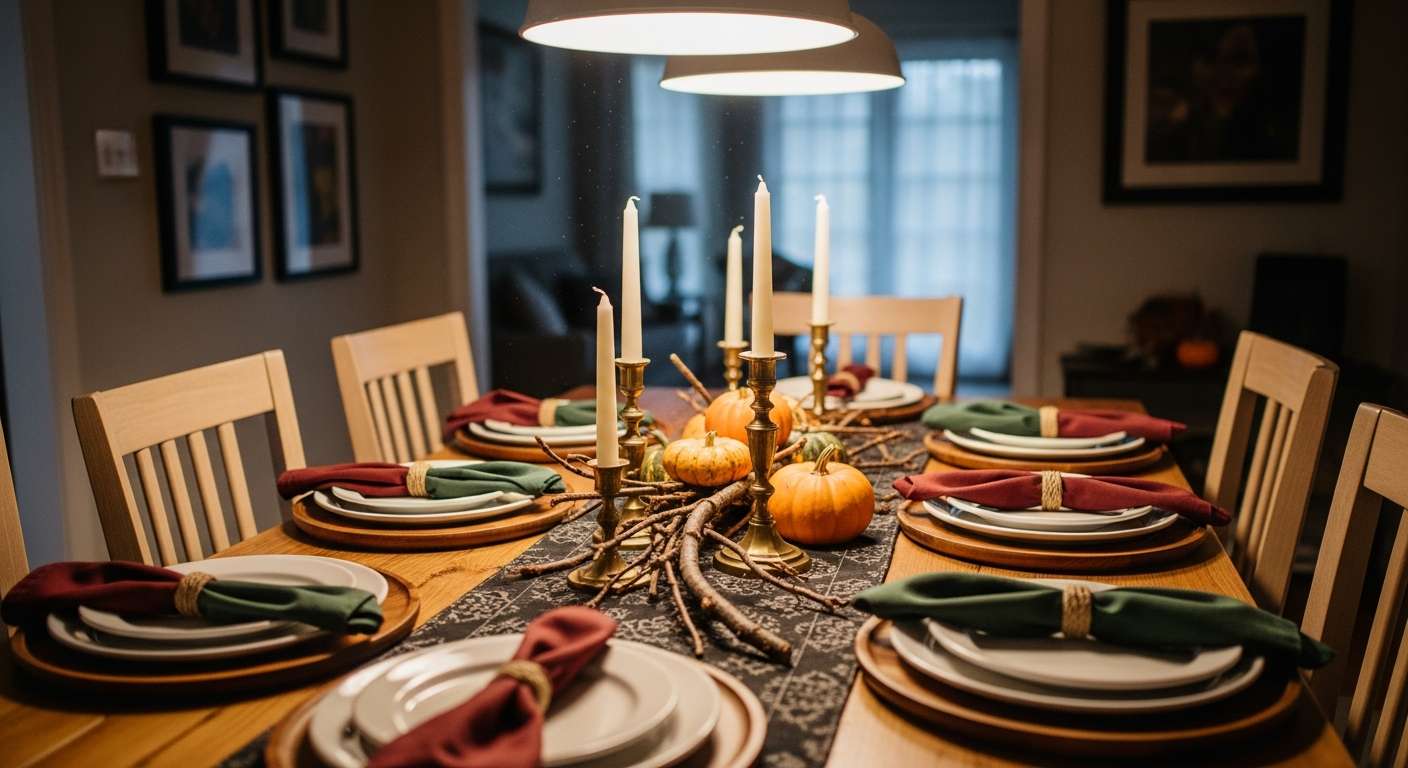
Interior designer Lynneah Bennett of Ivory & Noire builds her Thanksgiving tablescapes from the ground up, starting with a natural linen tablecloth as a neutral foundation. She layers a patterned runner down the center, adds dark brown woven placemats, tops those with wooden chargers, and only then places the actual dinnerware a sequence that produces a table feeling substantial without being cluttered, where every layer adds visual interest while still serving a functional purpose.
This layering approach solves a persistent tension in table setting: the gap between "festive" and "functional." A bare table with plates feels utilitarian. A table covered in decorations leaves no room for serving dishes. The layered method creates texture and warmth while maintaining clear zones for food, drink, and actual eating. The key is varying materials something woven, something smooth, something with pattern so each layer reads as distinct rather than redundant.
One detail worth noting: chargers (those large decorative plates that sit under the dinner plate) are meant to be removed before the main course is served. I mention this because I've been to Thanksgiving dinners where guests awkwardly tried to cut turkey on a plate sitting atop a wicker charger, and nobody knew whether removing it was allowed. It is. That's what they're for.
Centerpieces That Don't Block Conversation
The single most common Thanksgiving table mistake is the centerpiece that looks stunning on Instagram but prevents anyone from seeing the person across from them. A good rule: if you can't make eye contact over it while seated, it's too tall. This eliminates roughly 80% of the elaborate arrangements you'll see in design magazines, which are photographed from above or at angles that don't exist during an actual meal.
Low arrangements work better for Thanksgiving specifically because the table needs to accommodate serving dishes, and tall centerpieces compete with the food rather than framing it. A runner of small pumpkins and gourds interspersed with votive candles creates visual interest across the entire table length without creating barriers. Alternatively, a single substantial arrangement placed off-center near one end of the table rather than dead middle can anchor the setting without dominating it.
The Fundamentals Behind a Good Thanksgiving Table
After researching dozens of designer recommendations and retail trends, I'm struck by how much of the Thanksgiving table decor conversation focuses on purchases rather than principles. The fundamentals haven't changed: candles for lighting, comfortable seating, enough space to pass dishes without knocking things over, and some acknowledgment that this particular meal carries emotional weight.
The National Retail Federation found that 91% of Americans plan to celebrate winter holidays this year, and NRF Vice President Katherine Cullen noted that "time and again, Americans prioritize spending on loved ones for holidays despite economic uncertainty." That spending often goes toward the table not because the table needs it, but because preparing a beautiful setting is itself an act of care. The decor isn't really about the decor. It's about signaling to the people you've invited that you thought about them, that you wanted this to be special, that you put in effort.
A perfectly styled table with no thought behind it reads as hollow. A slightly chaotic table set with intention reads as welcoming. The difference isn't in the objects it's in whether the person who set it was thinking about their guests or their Pinterest board. Most people can tell the difference, even if they can't articulate it, and that's the real secret to Thanksgiving table decor that works.