Home Decor in 2025: Why Maximalism, Rich Color, and Texture Are Replacing the All-White Era

Home Decor in 2025: Why Maximalism, Rich Color, and Texture Are Replacing the All-White Era
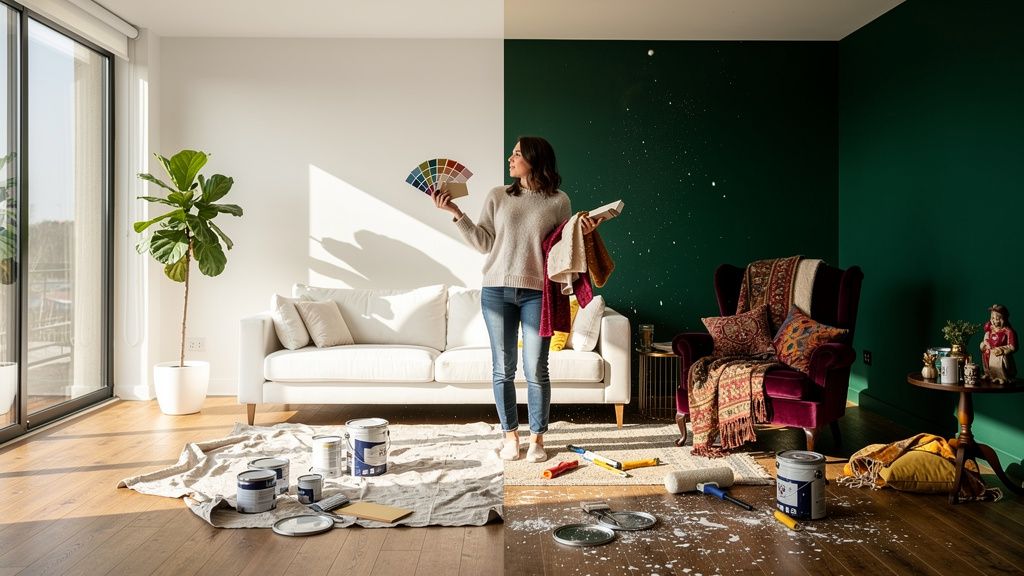
The sterile white living room had a good run. For nearly a decade, the formula was simple: white walls, white sofas, maybe a single fiddle-leaf fig for personality. But if you've been paying attention to what designers are actually doing—not what Pinterest boards from 2019 suggest—you've noticed the shift. Home decor is getting louder, warmer, and considerably more interesting.
The global home decor market hit $133.62 billion in 2024 and is projected to reach $139.05 billion this year, according to Halman Thompson's interior design statistics report. That growth isn't coming from people buying more white throw pillows. It's coming from consumers who are tired of living in spaces that look like they were staged for a real estate listing rather than actually inhabited.
The Death of All-White Interiors
When Vogue asked 11 top interior designers about what's on its way out, the answer was nearly unanimous: all-white interiors. The aesthetic that dominated Instagram feeds and shelter magazines for years is finally losing its grip. This isn't just about boredom—though there's plenty of that. It's about a fundamental shift in what people want from their homes.
The pandemic changed how we think about domestic space. When your living room doubles as your office, gym, and restaurant for three years straight, you start craving warmth over minimalism. You want a room that feels like it's hugging you back, not one that looks like a gallery waiting for art that never arrives.
According to the 1stDibs Designer Trends Survey, 33 percent of interior designers say maximalism is their guiding principle for 2025—tied with eclecticism at the top. Together, these two aesthetics have bumped minimalism, mid-century modernism, and Scandinavian modernism from the top positions they've commanded in recent years. That's a significant shift in an industry that moves slowly, where a "trend" often takes five to seven years to fully mature and another decade to fade.
Color Is Back, and It's Not Playing Safe
Forget greige. Forget "accessible beige." The colors dominating home decor conversations are deep greens, plums, burgundy, and chocolate brown. Melanie Russo of Calder Design Group told Forbes that rich color palettes are defining 2025 interiors, with saturated jewel tones replacing the muted neutrals that felt fresh a few years ago but now read as dated.
Burgundy, in particular, is having a moment that extends beyond fashion. As the shade appeared in collections from Gucci and Khaite, it simultaneously migrated into interiors—a reminder that home decor doesn't exist in a vacuum separate from broader cultural aesthetics. The color works because it's sophisticated without being cold, dramatic without demanding constant attention.
Apartment Therapy's 2024 survey of 154 designers found that color became "simultaneously earthier but also more moody" over the past year, with deeper, darker shades taking precedence over the bright, saturated hues that briefly surged post-lockdown. The pendulum swung from "dopamine decor" to something more grounded.
What I find interesting is that this isn't a wholesale rejection of neutrals—it's a rejection of neutrals as the only acceptable choice. The most compelling rooms I've seen recently layer warm neutrals with strategic punches of saturated color, creating spaces that feel both livable and intentional. The all-neutral room now reads as unfinished rather than sophisticated.
Texture as the New Status Symbol
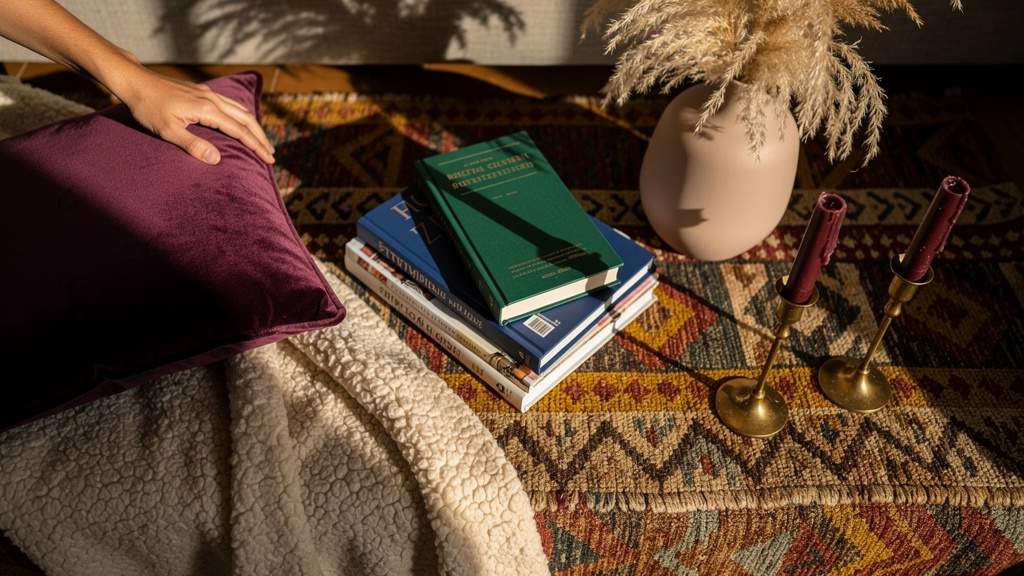
When everything in a room is smooth and uniform, it photographs well but feels sterile in person. Designers are correcting for this by layering textures aggressively: boucle against velvet, raw wood against polished metal, handwoven textiles against machine-made furniture. The goal is spaces that engage the senses beyond the visual—rooms that feel as considered as they look.
This tracks with broader consumer behavior around authenticity. The US home decor market is forecast to grow by $75.9 billion at an 8.2% CAGR between 2024 and 2029, according to Technavio, and a significant portion of that growth comes from consumers willing to pay premiums for pieces that feel handmade or artisanal—even when they're not. Texture signals craft, and craft signals value in ways that a perfectly smooth surface cannot.
The National Association of Realtors' Houzz report highlights rounded furnishings and organic shapes as continuing trends, which makes sense in this context. Curved sofas and cylindrical legs aren't just aesthetically interesting—they invite touch in ways that sharp angles don't, making them a natural fit for interiors designed to feel lived-in rather than merely displayed.
What's Actually Worth Buying
Most people should ignore "trends" entirely when making significant home decor purchases. A sofa lasts 10-15 years. A dining table might last your entire adult life. Buying either based on what's trending in 2025 is a reliable path to regret by 2030.
That said, there are smart ways to participate in current aesthetics without committing to them permanently:
- Paint is the cheapest way to transform a room—if burgundy calls to you, try it on an accent wall before upholstering your sectional in it
- Textiles (throw pillows, blankets, curtains) can introduce texture and color without major investment
- Art and objects are where personality should live, not in the bones of your furniture
- Lighting gets overlooked, but swapping a basic fixture for something sculptural changes a room more than most furniture upgrades
- The 24% of designers planning to incorporate more Art Deco pieces, per 1stDibs, are onto something—vintage and antique pieces hold value and add character that mass-produced furniture cannot
The Sustainability Question Nobody Wants to Answer
There's an uncomfortable tension in home decor media that rarely gets addressed directly. The same publications celebrating "2025 trends" are also running pieces about sustainable living and conscious consumption. These two impulses are fundamentally at odds.
If sustainability mattered as much as the industry claims, we'd be talking about buying less and buying better—not about which shade of green is "in" this season. The most sustainable home decor decision is almost always keeping what you have, reupholstering rather than replacing, or buying secondhand. None of that sells magazines or generates affiliate revenue, which explains why it rarely comes up.
I don't have a clean resolution to this tension, and I'm skeptical of anyone who claims to. The eco-friendly home decor segment is expected to expand by approximately 7% over the next few years according to Market Research Future, which suggests consumers are at least paying lip service to sustainability. Whether that translates to meaningful behavior change remains an open question that the industry seems reluctant to examine honestly.
What 2025's Decor Shifts Actually Mean for Your Home
The maximalism surge won't last forever—nothing does. My guess is we'll see a correction in three to five years, though probably not back to stark minimalism. More likely, we'll land somewhere in between: rooms with personality and color but without the overwhelming layering that defines peak maximalism.
For now, the message from designers is clear: your home should look like someone actually lives there. That means embracing imperfection, mixing styles that theoretically shouldn't work together, and choosing pieces because you love them rather than because they perform well in a grid of Instagram photos.
The $139 billion home decor market will keep churning out products regardless of what any of us do. The question is whether you're decorating for algorithms or for yourself—and in 2025, more people seem to be choosing the latter, which may be the one shift in this industry actually worth paying attention to.