How to Decorate a Large Wall: Ideas That Actually Work for Every Style and Budget

How to Decorate a Large Wall: Ideas That Actually Work for Every Style and Budget
A large, empty wall is one of the most common decorating problems in modern homes, and one of the most consistently overthought. Open floor plans and vaulted ceilings both standard features in homes built after the mid-1990s have left millions wondering how to decorate a large wall that seems to dominate their space. The good news is that decorating these walls successfully depends on understanding a few principles of scale, proportion, and visual weight, rather than spending a fortune on a single dramatic piece.
The bad news is that most advice on this topic is either too vague ("add something meaningful!") or too prescriptive (endless numbered lists that ignore the actual dimensions of your room). This guide takes a different approach, focusing on principles that adapt to your specific space when decorating big walls.
Why Large Walls Feel So Hard to Decorate
The problem isn't really the wall it's the instinct to treat it the same way you'd treat a smaller one, just with bigger stuff. People hang a single medium-sized print in the middle of a 12-foot wall and wonder why it looks lost. They add three matching frames in a horizontal row and wonder why it looks like a hotel corridor. The issue is that decorating a large wall has a different visual logic than a standard one, and the usual decorating rules don't scale up automatically.
There's also a real tension between doing too much and doing too little. As the team at Thrifty Decor Chick put it after years of covering this exact problem: it's genuinely difficult to tread the line between getting too busy and not doing enough. That tension is worth sitting with before you buy any large wall decor ideas, because the wrong solution a cluttered gallery wall in a room that needed one bold statement, or a single tiny print on a wall that needed layering can make a space feel worse than the blank wall did.
Not every large wall needs to be decorated in the traditional sense. A two-story foyer wall covered in framed art often draws more attention to the wall's overwhelming scale rather than softening it. Sometimes the smarter move is to bring the visual interest down to eye level and let the upper portion breathe.
Start With Scale: The Single Most Important Decision for Large Wall Decoration
Before you pick a style or a medium, you need to settle the scale question. For decorating big walls, the options broadly fall into two camps: one big thing, or a composed arrangement of multiple things. Either can work brilliantly or fail badly. The choice depends on your room's architecture, your existing furniture, and your tolerance for the time it takes to get an arrangement right.
A single oversized piece whether that's a canvas print, a large mirror, a statement textile, or an architectural element works best when the wall has a clear focal point to anchor it, like a sofa, a console table, or a fireplace below it. The standard guidance from Studio McGee, one of the more technically rigorous design studios to publish on how to decorate a large wall, is to hang a large solo piece at eye level when it stands alone, or 4 to 6 inches above a furniture piece for the most visually balanced result. That 4-to-6-inch gap is the detail most people get wrong they either push the art too high (leaving an awkward void between frame and furniture) or sit it too close (making the piece look like it's resting on the sofa back).
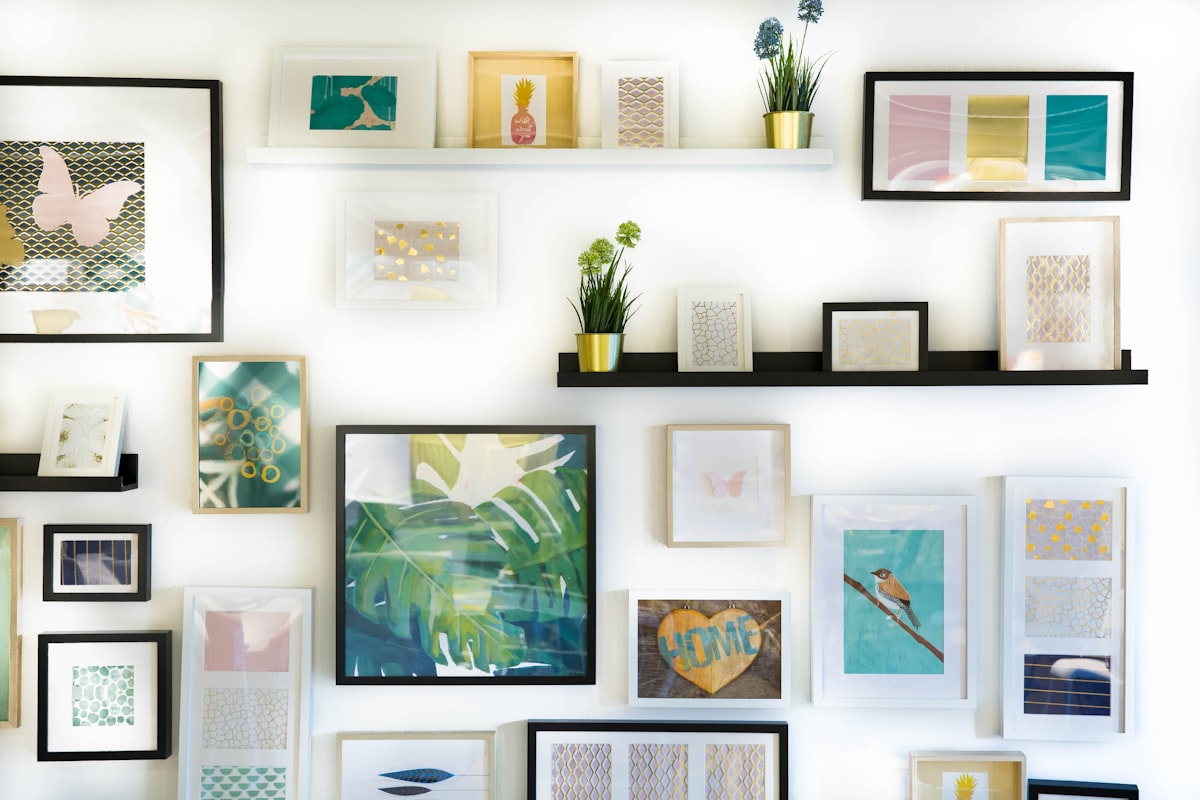
Gallery walls, by contrast, are better suited to walls without a dominant anchor piece below them a long hallway wall, a dining room wall without a sideboard, or a staircase. They also give you more flexibility to build incrementally and adjust over time, which is why they've remained popular large wall decor ideas for nearly a decade despite periodic declarations that the trend is over. The key to a gallery wall that doesn't look chaotic is to decide on one unifying element before you start: a consistent frame finish, a consistent mat color, a consistent subject matter, or a consistent color palette. One is enough trying to unify everything produces something sterile, while unifying nothing produces a mess.
Architectural Solutions for Decorating Large Walls Without Hanging Anything
This is the category that gets underused, and it's where some of the most permanent, high-value improvements for how to decorate a large wall live. Board and batten paneling vertical boards fixed to the wall with a horizontal rail adds texture, architectural interest, and a sense of craftsmanship that no framed print can replicate. It works in traditional, farmhouse, and transitional interiors, and a DIY installation on a standard living room wall typically runs between $200 and $500 in materials, depending on the ceiling height and the spacing of the battens.
Wainscoting, shiplap, and beadboard paneling follow the same logic: they give the wall a reason to exist without requiring you to fill it with objects. Wallpaper has had a significant resurgence since around 2020, particularly on single accent walls in living rooms and bedrooms. A large-scale botanical, geometric, or abstract print can do the work of an entire gallery wall in a single application, and modern peel-and-stick options have made it a genuinely reversible choice for renters and commitment-phobes alike when decorating big walls.
Scale matters here too: a small repeat pattern on a large wall will look busy and restless, so go for a pattern with a large repeat at least 12 to 18 inches so the design reads clearly from across the room.
Mirrors, Shelves, and the Furniture-as-Wall-Decor Approach
A large mirror is one of the most reliable tools for a big wall, and not just because it reflects light and makes a room feel larger (though it does both). A well-chosen mirror ideally at least 36 inches wide for a standard living room wall, larger for anything over 10 feet adds visual weight without visual clutter, which is exactly what an oversized wall usually needs. Leaning a large mirror against the wall rather than hanging it is a legitimate choice, not a lazy one; it reads as intentional and slightly relaxed in a way that works well in casual or eclectic interiors.
Floating shelves are frequently overlooked as a large-wall solution. Most people think of them as storage, but a well-composed shelf arrangement mixing books, objects, plants, and a small framed piece or two creates the kind of layered, lived-in look that a gallery wall of photographs sometimes struggles to achieve when you're learning how to decorate a large wall.
Interior designer Laurel Bern has pointed out that on a long living room wall, a sofa with end tables can anchor 12 feet or more of horizontal space before you've added a single thing to the wall itself. The furniture in front of the wall is part of the wall's composition, and treating them as separate problems is how you end up with a sofa that floats in the middle of the room while the wall behind it feels abandoned.
When to Use Plants, Textiles, and Non-Traditional Materials for Large Wall Decor
Living plant walls have moved from restaurant installations to residential spaces over the past several years, and even a simplified version a grid of wall-mounted planters, a collection of hanging pots at varying heights can fill a large wall with genuine life and texture. The maintenance question is real, and I won't pretend otherwise: a full living wall requires irrigation planning and the right light conditions, and most homes don't have both. But a curated arrangement of trailing pothos, mounted air plants, or even high-quality faux greenery can achieve a similar effect with far less infrastructure when decorating large walls.
Textiles tapestries, vintage rugs hung horizontally, large pieces of framed fabric are underused in American interiors despite being standard practice in Scandinavian, Moroccan, and Japanese design traditions. A large woven textile brings warmth, acoustic dampening, and color to a wall in a way that canvas prints simply can't. Framing a piece of antique batik or a section of vintage kilim behind glass gives it the formality of fine art while preserving the tactile richness of the material itself.
One honest gap in my research: I couldn't find reliable data on how large-wall treatment choices affect resale value in different regional markets. Wallpaper, for instance, is conventionally considered a liability by real estate agents in some markets and a selling point in others, and the same is probably true of built-in shelving and board-and-batten paneling. If you're decorating with an eye toward eventual resale, that's a question worth putting to a local agent rather than a design blog.
Practical Rules for Getting the Proportions Right When Decorating Big Walls
The gallery standard for art placement centering the piece at 57 to 60 inches from the floor exists because that's roughly average human eye level, and it's a genuinely useful starting point for any wall treatment. But on a very large wall, especially one above a substantial piece of furniture like a sectional sofa or a king-sized headboard, that rule can produce art that feels too low. In those cases, centering the piece relative to the furniture below it (rather than relative to the floor) tends to produce a more cohesive result when figuring out how to decorate a large wall.
For gallery arrangements, the standard advice is to treat the entire grouping as a single unit and center that unit on the wall. Lay the arrangement out on the floor first, photograph it, then transfer it to the wall using paper templates and painter's tape before committing to any holes. It takes an extra hour and saves a wall full of regrettable nail holes. Scale up more than you think you need to. The most consistent mistake in large-wall decorating is buying a piece that looks enormous in a shop or on a screen, hanging it on the wall, and watching it disappear.
A 24-by-36-inch print that dominates a small bedroom will look like a postage stamp on a 14-foot living room wall. For a wall over 10 feet wide, you're generally looking at art that's at least 40 to 60 inches across and for a truly dominant statement piece, larger still. The discomfort that comes with choosing something that big is almost always misplaced; the piece that feels slightly too large in the store is usually exactly right on the wall.
Putting It Together Without Starting Over
Start with one anchor element the thing that will define the visual center and build outward from there rather than trying to plan the whole composition in advance. That anchor might be a large mirror, a single oversized canvas, a built-in bookcase, or a wallpapered section. Everything else supplementary art, sconces, a console table, plants can be added incrementally as you live with the space and understand what it needs.
That iterative approach is how most professional designers actually work on large walls, even if the finished result looks like it was conceived all at once. The rooms that feel most resolved aren't usually the ones that were planned to the last detail before anything was purchased they're the ones where someone kept editing until nothing felt wrong, and then stopped.
A large wall sets the tone for everything in front of it, which is why it often warrants more investment than other surfaces in the room, and when you establish the wall as a strong backdrop with its own point of view, the furniture arrangement, the rug, and the lighting all become easier to resolve, since you're no longer working against a void that absorbs everything you place in the room.