Wallpaper the Beach: A Complete Guide to Coastal Wallpaper for Your Home


Wallpaper the Beach: A Complete Guide to Coastal Wallpaper for Your Home
There's something undeniably appealing about bringing the serenity of the shore into your living space. Whether you live miles from the ocean or right on the sand, beach-themed wallpaper transforms any room into a calming retreat that evokes waves, sunshine, and salty air. This design approach has surged in popularity as homeowners seek spaces that feel like permanent vacation even in the middle of landlocked suburbs.
Coastal wallpaper encompasses far more than cartoonish seashells and sailboats. Today's options range from sophisticated watercolour seascapes to subtle textures that mimic weathered driftwood, from bold tropical palm prints to refined nautical stripes that work in formal dining rooms. The key lies in understanding your options and choosing designs that complement your existing decor rather than overwhelming it.
Understanding Coastal Wallpaper Styles
Beach-inspired wallpaper comes in several distinct aesthetic categories, each creating a different mood and working better in certain spaces than others. Knowing these variations helps you make informed decisions before purchasing.
Nautical and Maritime Designs
This classic category features navy blues, crisp whites, and warm reds arranged in recognizable patterns. Think bold horizontal stripes reminiscent of boat sails, rope motifs, compass roses, and subtle anchor graphics. Nautical wallpaper works exceptionally well in bathrooms, entryways, and children's bedrooms, though sophisticated implementations can elevate formal living spaces too.
Tropical and Palm-Inspired Patterns
For a more lush, exotic feel, tropical coastal wallpaper brings the Caribbean directly to your walls. Monstera leaves, banana palms, bird-of-paradise flowers, and hibiscus blooms dominate these designs. These patterns tend to be more vibrant and work best as accent walls or in spaces where you want to create visual drama think a statement wall behind a bed or a powder room that packs a punch.
Watercolour and Abstract Ocean Scenes
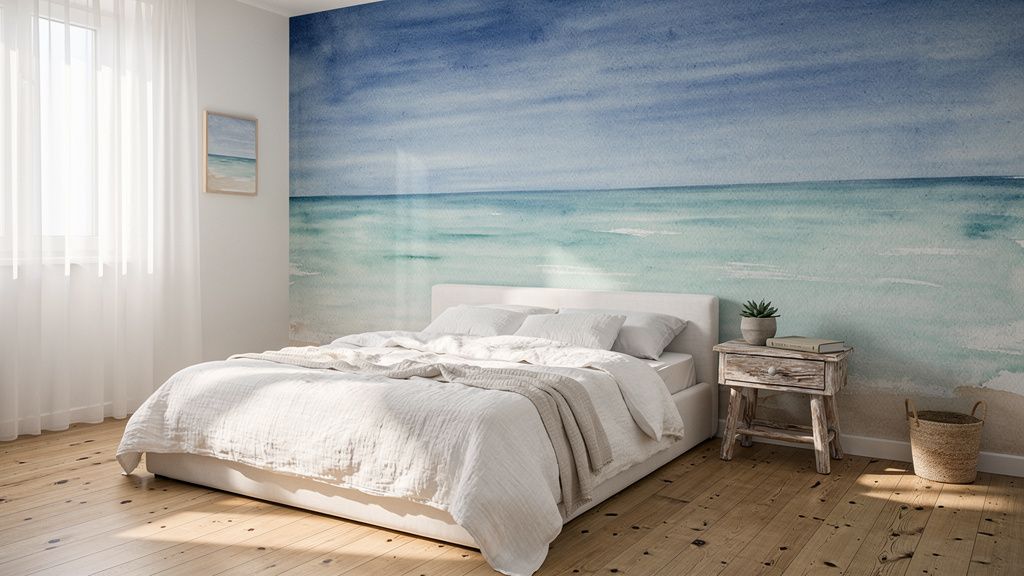
Perhaps the most sophisticated option, watercolour beach wallpaper captures the ethereal quality of the sea without literal depictions. Think soft gradients blending from deep navy to aqua, abstract wave formations, or subtle sand dune silhouettes. These designs read as modern and artful, working beautifully in master bedrooms, living rooms, and even home offices where you want calm energy rather than bold graphics.
Textural and Natural Finishes
Not all coastal wallpaper relies on printed patterns. Grasscloth and textured options that mimic natural materials weathered wood, woven seagrass, linen add tactile interest while maintaining that organic, beachy feel. These work particularly well in living areas and dining rooms where you want sophistication over whimsy.
Peel-and-Stick vs Traditional Wallpaper: Making the Right Choice
Before selecting your design, you'll need to decide on the installation type that best suits your situation. This choice impacts everything from cost to how long the wallpaper lasts to whether your landlord will approve.
Peel-and-stick coastal wallpaper has revolutionized how renters approach interior design. You can test a beach aesthetic in a bathroom or create a feature wall without committing to permanent changes. According to design experts, these options particularly shine in rental properties where traditional wallpaper installation would violate lease agreements yet they also appeal to homeowners who love to refresh their spaces frequently.
Traditional wallpaper, while requiring more installation effort, offers superior durability and a cleaner, more uniform appearance. For a beach house that sees seasonal use or a primary residence where you want the coastal vibe to last a decade, traditional non-woven wallpapers provide better long-term value despite the higher upfront investment.
How to Choose the Perfect Beach Wallpaper for Your Space
Selecting coastal wallpaper involves more than picking a pretty pattern. Several practical factors determine whether your choice succeeds in your specific space.
- Assess your existing colour palette. Look at your furniture, textiles, and architectural details. Coastal wallpaper should complement rather than clash with these elements. If your room features warm wood tones, lean toward sandy beiges and soft greens rather than cool blues.
- Consider natural light. Rooms with abundant windows can handle darker, more saturated coastal patterns. North-facing or naturally dim spaces benefit from lighter, brighter wallpaper with subtle reflectivity think metallic accents or high-gloss finishes that bounce available light around the room.
- Match scale to room size. Large, bold tropical prints overwhelm small bathrooms or compact bedrooms. Conversely, tiny pin-dot patterns get lost in spacious open-concept areas. Measure your walls and request samples to evaluate pattern scale before committing.
- Think about visibility and traffic. High-traffic hallways and families with children might benefit from vinyl-coated options that wipe clean. Master bedrooms and adult spaces can accommodate delicate textures and specialty finishes that require more careful maintenance.
- Order samples first. Always purchase sample swatches before buying full rolls. Viewing the actual paper in your space, under your specific lighting conditions, reveals true colours and textures that screen images cannot convey.
Interior designers consistently emphasize that successful coastal wallpaper installations balance the beachy elements with restraint. As one design professional noted, the goal is creating a space that feels like a sophisticated retreat rather than a tourist shop subtle references to the shore that enhance rather than dominate your decor.
Room-by-Room Applications and Benefits
Coastal wallpaper works differently depending on where you install it. Understanding these nuances helps you maximize impact while avoiding costly missteps.
Bathrooms benefit enormously from beach-themed wallpaper. The moisture-resistant properties of modern vinyl options make them practical, while the small scale of most bathrooms allows for bolder patterns without overwhelming the space. A tropical print behind a pedestal sink or nautical stripes in a powder room creates instant personality.
Living rooms typically call for more refined coastal wallpaper choices. Watercolour scenes, subtle textures, or sophisticated stripe patterns create focal points without competing with furniture and entertainment systems. An accent wall behind the main seating area often provides the perfect compromise impact without commitment to wallpapering the entire room.
Bedrooms respond beautifully to calming coastal aesthetics. Soft, muted patterns promote relaxation, making them ideal for master retreats. Consider the psychological effect of your pattern choice: busy tropical prints energize, while simple marine gradients calm.
Kitchens and dining areas can incorporate coastal wallpaper as unexpected accents. A breakfast nook wall, the back of open shelving, or a kitchen island surround all provide opportunities to introduce beachy vibes without the moisture concerns of full kitchen installation.
"Coastal design is all about creating a cool and effortless vibe. Think watery colors inspired by the sky, the sand, and the sea." Amanda Lauren, Forbes Contributor on Interior Design
The benefits extend beyond aesthetics. Quality coastal wallpaper can actually improve a room's perceived spaciousness through strategic colour choices light values recede visually, making small rooms feel larger. The psychological connection to water and nature that these designs evoke has been shown to reduce stress and promote relaxation, which explains their enduring appeal in residential design.
Common Mistakes to Avoid When Wallpapering the Beach
Even enthusiastic DIYers make predictable errors when bringing beach wallpaper into their homes. Learning from these pitfalls saves money and frustration.
Overdoing the theme ranks among the most common missteps. Covering every wall in a bold tropical print creates visual chaos rather than sophisticated coastal style. Most designers recommend limiting beach wallpaper to one or two accent walls while keeping surrounding surfaces neutral. This creates the intended focal point without overwhelming the space.
Ignoring the undertones in your existing decor creates colour conflicts that undermine the cohesive feel you're aiming for. Some coastal papers lean green-blue while others trend toward yellow undertones. Understanding whether your furniture and finishes are warm or cool helps you select complementary wallpaper rather than competing colours.
Skipping proper wall preparation leads to disappointing results regardless of how beautiful your coastal wallpaper appears in the package. Walls must be clean, smooth, and properly primed especially when using peel-and-stick varieties that reveal every imperfection. Taking time to patch, sand, and prime before installation dramatically affects the final appearance.
Failing to order sufficient wallpaper from the same lot creates obvious colour variations across your walls. Always calculate your needs and order all required rolls at once, confirming they come from the same production batch. Even identical pattern numbers can vary slightly between manufacturing runs.
Expert Tips for a Lasting Coastal Wallpaper Installation
Professional installers and designers share these practical insights for achieving professional-quality results with beach-themed wallpaper.
- Acclimate your wallpaper to your home's temperature and humidity for 48 hours before installation this prevents expansion and contraction issues after hanging.
- Use a level and laser guide to ensure your first strip is perfectly vertical, as even slight misalignment compounds across multiple strips.
- For peel-and-stick options, start from the top and work downward slowly, using a smoothing tool to eliminate air bubbles as you go.
- Match patterns meticulously at seams by dry-fitting strips before removing backing paper this precision prevents visible pattern breaks.
- Invest in a sharp utility knife and change blades frequently for clean cuts at corners and edges.
- For traditional wallpaper, apply primer to your walls first this creates the proper surface for paste adhesion and makes eventual removal easier.
- Keep leftover wallpaper rolls stored flat in a dry location for future repairs.
One often-overlooked consideration involves the long-term maintenance of your coastal wallpaper. High-humidity bathrooms may require periodic wiping to prevent mould growth at seams, while sun-drenched rooms can experience fading over time. Positioning furniture and textiles to block direct sunlight on feature walls extends the vibrancy of your coastal wallpaper significantly.
Frequently Asked Questions About Beach Wallpaper
What rooms work best for coastal wallpaper?
Coastal wallpaper excels in bathrooms, bedrooms, living room accent walls, and entryways. The humidity resistance of modern options makes bathrooms particularly suitable, while the calming aesthetics of most beach designs promote relaxation in bedrooms and living spaces.
Can I use beach wallpaper in a small space?
Absolutely small spaces often benefit most from coastal wallpaper when you choose appropriately scaled patterns. Lighter colours and smaller patterns work best in compact rooms, and limiting the wallpaper to one wall prevents the space from feeling cramped.
How do I clean coastal wallpaper?
Most vinyl-coated coastal wallpapers clean with a damp cloth and mild soap. Avoid abrasive cleaners or excessive moisture that might seep into seams. For traditional (non-vinyl) papers, spot-clean gently with a dry or barely damp cloth.
Will beach wallpaper make my room feel childish or theme-park-like?
The sophistication of your coastal wallpaper choice determines the mature or playful feel. Watercolour scenes, subtle textures, and refined nautical patterns create elegant, adult-friendly spaces. Avoiding overly literal imagery (cartoon dolphins, obvious treasure maps) keeps the aesthetic refined rather than whimsical.
How long does coastal wallpaper last?
Traditional installation typically provides 10-15 years of lifespan, while peel-and-stick options generally last 3-7 years depending on environmental conditions and handling. Proper installation and maintenance significantly extends the life of either type.
Can I install beach wallpaper over textured walls?
Traditional wallpaper requires smooth, clean surfaces for proper adhesion and appearance. Peel-and-stick varieties can conform to slight texture but will highlight any wall imperfections. For best results, either sand down textured walls or consider alternative treatments before installation.
Key Takeaways
- Coastal wallpaper encompasses diverse styles from nautical stripes to watercolour seascapes choose based on your room's existing decor and the mood you want to create.
- Peel-and-stick wallpaper offers rental-friendly installation and easy removal, while traditional wallpaper provides superior durability for long-term installations.
- Order samples and evaluate them in your specific space before purchasing full rolls to ensure colour accuracy.
- Limit beach wallpaper to accent walls in most rooms to prevent overwhelming the space with the theme.
- Proper wall preparation and careful installation dramatically affect the final appearance and longevity of your coastal wallpaper.
- Consider lighting conditions, traffic patterns, and humidity levels when selecting both the pattern and the wallpaper type for each room.
- The best coastal wallpaper creates sophisticated, calming spaces that evoke the beach without feeling like a themed attraction.