Meditation room ideas on a budget

Why a Dedicated Meditation Space Matters
You don't need a sprawling estate or a fat trust fund to create a sanctuary in your home. What you need is intention and a few smart choices. Research consistently shows that having a designated space for mindfulness practice dramatically increases the likelihood you'll actually stick with it. Kim Weller, meditation practitioner and head of well-being operations at Banyan Tree Veya Phuket, puts it plainly: "Meditation is a powerful tool for reducing stress and promoting overall well-being and mental health. Having a meditation space or room in your home can make your practice more effective and encourage a sustainable daily habit as you can easily meditate when it's convenient."
The numbers tell a compelling story. According to Pew Research's 2023 spirituality survey, 38% of Americans meditate at least a few times a month. That's a lot of people seeking calm. Yet many of them are doing it on living room floors, wedged between couch cushions and coffee tables, which frankly undermines the whole point. A space that signals "pause" to your nervous system makes meditation easier to start and easier to sustain.
Here's something that might surprise you: 87% of Americans believe that having extra space all to themselves makes them better people, according to a study called The Power of Space conducted by Embassy Suites. For parents, that number carries extra weight 71% admit to doing whatever it takes to get alone time, and 69% feel renewed instead of guilty when they finally get it. Your meditation corner isn't a luxury. It's infrastructure for your mental health.
Start With What You Already Have
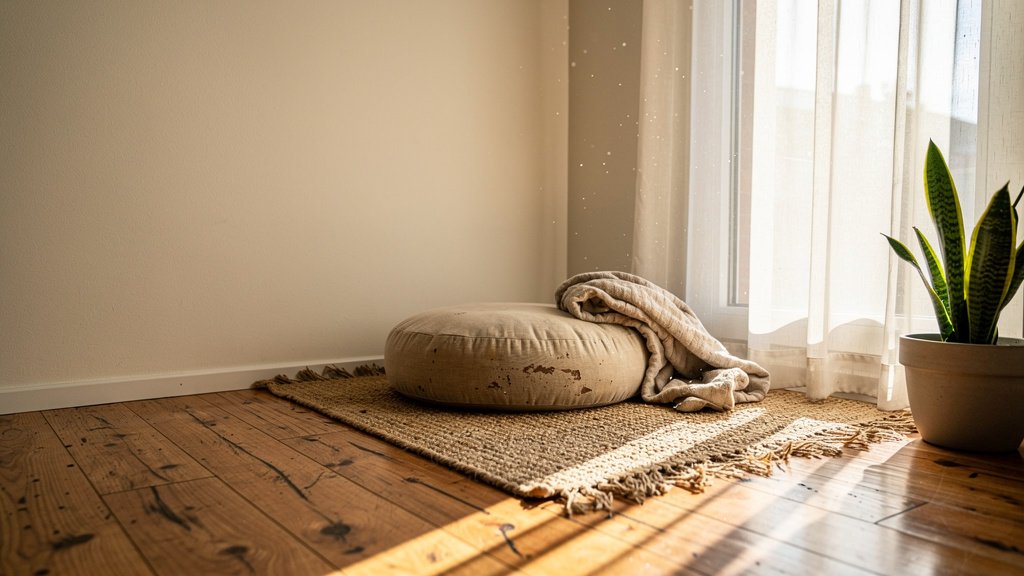
The most budget-friendly meditation rooms aren't built from scratch they're excavated from existing space. That awkward corner beside the bookshelf? The empty closet you never open? The narrow strip of bedroom between the window and the dresser? These forgotten zones are prime real estate for a mindfulness practice.
The key is treating the space as a deliberate pause button. You don't need to knock down walls. You need to change what that corner communicates to your brain. A few strategically placed items transform a dead zone into a destination. The average American spends less than $100 on initial meditation room setup when they embrace what they already own, and the results can be just as effective as a professionally designed wellness studio.
Think about traffic flow, too. Your meditation corner should be accessible but slightly set apart from the main action of your home. A spot near a window offers natural light and a connection to the outside world, which helps your practice feel grounded rather than claustrophobic. If you're short on square footage, consider a room divider or even a tall plant to create visual separation without permanent changes to your lease or walls.
Color and Light: The Two cheapest Transformations
Paint is one of the most impactful investments you can make in a meditation room, and it costs less than you think. A single quart of quality paint runs about $30 and covers roughly 50 square feet more than enough for a small accent wall or the interior of a closet-turned-sanctuary. The color you choose matters enormously from a psychological standpoint.
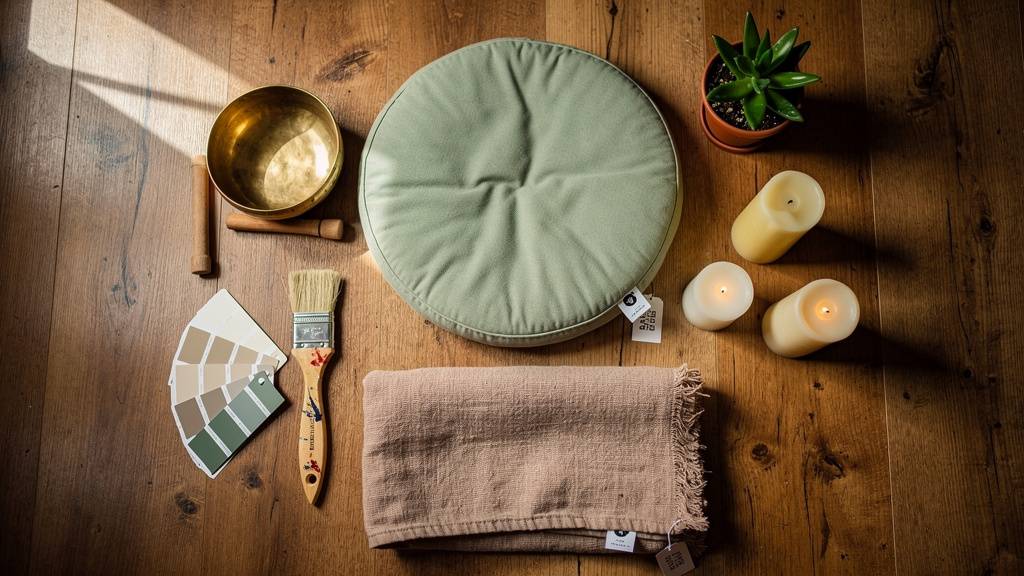
Cool colors like soft blues, sage greens, and muted lavenders create a calming environment because they evoke feelings of serenity and nature. Warm neutrals creams, warm whites, soft taupes feel cozy and comforting without overwhelming the senses. If you're renting and can't paint, removable wallpaper or even a large fabric wall hanging in a soothing tone accomplishes much of the same effect for under $50.
Natural light is free, and it's the best lighting for meditation. Position your cushion or chair near a window if possible. When natural light isn't available, layer your artificial sources. A single harsh overhead bulb kills the vibe instantly. Instead, combine a floor lamp with warm-toned LED bulbs and a few candles. The flickering flame adds a ritualistic element that signals to your brain: this is different from the rest of the house. This is where we slow down.
I should note that I couldn't find solid data on how much the average person spends on lighting upgrades specifically for meditation spaces, but swapping out a bare bulb for a lamp you already own costs nothing and makes an immediate difference.
Natural Elements Bring the Outdoors In
Plants are the budget decorator's secret weapon for meditation spaces. They add life, color, and texture without demanding much in return. Some of the best air-purifying options snake plants, spider plants, and peace lilies are also among the cheapest, often running $10 to $25 at local nurseries or big-box stores. NASA's research on indoor air quality identified these plants as particularly effective at filtering toxins, which means your meditation space actually cleans the air while you breathe.
The tactile experience of caring for a plant parallels meditation itself: both require patience, attention, and a willingness to wait for results. That's not accidental. Bringing green into your space creates a visual reminder that growth is slow and that's the point.
Beyond plants, consider natural materials for your accessories. A wooden stool, a bamboo tray, a wicker basket for storing blankets these textures ground a room visually and physically. You don't need to shop at expensive home stores. Thrift shops and dollar stores carry items that work beautifully with a little creativity. A plain wooden bowl from the craft store becomes a beautiful incense holder or a place to hold crystals or dried flowers.
Floor Seating and Textiles
Traditional furniture often works against meditation. Chairs and sofas are designed for alertness or reclining neither of which matches the grounded feeling you're after. Floor seating brings your center of gravity down, which physically reinforces stability and presence.
Meditation cushions (zafus) are the gold standard, but they can run $40 to $100 each. A budget alternative? Floor pillows from retailers like IKEA, World Market, or even Amazon many under $25. Layer two or three for the right height. A simple yoga mat underneath provides cushioning and defines your practice zone visually.
Textiles do heavy lifting in a small budget meditation room. A soft throw blanket draped over a meditation bench adds warmth and texture. Curtains in a flowing fabric soften hard edges and block outside light when needed. Even a single area rug underfoot separates your practice space from the rest of the room and adds warmth to hard floors. These items add up quickly in a good way you can often find quality textiles at discount retailers for a fraction of what home decor boutiques charge.
Sound and Scent on a Dime
Meditation isn't only visual. What you hear and smell shapes the experience profoundly. The good news: these sensory elements are often the cheapest to implement.
For sound, start with what's free. Nature sound apps, ambient playlists on YouTube, or a simple white noise machine (often under $30) create sonic boundaries that signal "quiet zone" to your household. If you share walls with noisy neighbors, a small fan or air purifier also provides consistent background noise that masks disruptions.
Scent is arguably the most personal and powerful sensory element. Incense and candles carry cultural and spiritual significance across traditions, and they work remarkably well to anchor a space. Incense sticks run as low as $5 for a pack of 30, and beeswax or soy candles in calming scents like lavender, sage, or sandalwood cost $10 to $20. Essential oil diffusers ($15 to $40) offer a flameless option that doubles as a humidifier. Start with one signature scent and let it become associated with your practice over time, just catching that smell outside your meditation room will trigger a micro-calm response.
Making It Stick: The Real Budget Secret
Here's what nobody talks about: the cheapest meditation room is the one you actually use. A $500 setup collecting dust is infinitely more wasteful than a $30 corner you sit in every morning.
The secret to sustainability is lowering friction. Keep your cushion out. Leave your candles visible. Don't store your meditation supplies in a way that requires digging them out each time. The easier the space is to access physically, the more likely you are to access it mentally. This is where a true budget approach actually outperforms expensive designs when you've handpicked every item with intention, you feel a stronger connection to the space than you would to something professionally installed.
Consider adding one personal element that has meaning to you: a photograph, a small altar, a piece of art you made, a meaningful quote handwritten on cardstock. These touches cost nothing beyond your time but transform a generic room into yours.
Your meditation room doesn't need to be perfect. It needs to be used.