Indoor Railing Ideas: 25+ Stylish Designs to Transform Your Staircase

Indoor Railing Ideas: 25+ Stylish Designs to Transform Your Staircase
The staircase is often the first thing people notice when they walk into your home, and the railing is its defining feature. A well-chosen indoor railing does far more than keep your family safe on the stairs it sets the visual tone for your entire interior. Whether you're drawn to the warmth of natural wood, the sleek minimalism of glass, or the industrial edge of metal and cable systems, the right railing can transform a utilitarian necessity into a genuine design statement.
This guide walks you through the most popular indoor railing ideas trending in 2025, breaking down the materials, costs, design approaches, and practical considerations that matter most when planning your staircase upgrade. I've pulled together real cost figures, code requirements, and design insights to help you make decisions with confidence.
Types of Indoor Railing Systems
Indoor railings come in several distinct categories, each with its own aesthetic and functional profile. Understanding what's available is the first step toward choosing a system that works with your home's architecture and your personal style.
Wood Railings
Wood remains the most versatile and widely used material for indoor stair railings. It brings natural warmth, texture, and a sense of craftsmanship that pairs well with virtually any interior style, from traditional to modern farmhouse to transitional.
The key advantage of wood is its ability to be shaped, stained, or painted to match your existing millwork, cabinetry, or architectural details. Oak, maple, and walnut are the most popular hardwood choices for railing applications they hold up well to daily use and can be refinished if your tastes change over time. Pine is more affordable but won't endure as long as hardwood, making it better suited to lower-traffic settings or temporary solutions.
Wood railings typically feature a combination of a continuous handrail mounted on top of balusters (the vertical posts) that connect to the stair treads or a bottom rail. The profile of the handrail itself whether round, oval, or rectangular significantly impacts the overall look. A round oak handrail feels traditional and comfortable to grip, while a square-profile walnut rail reads as more contemporary and substantial.
Glass Railings
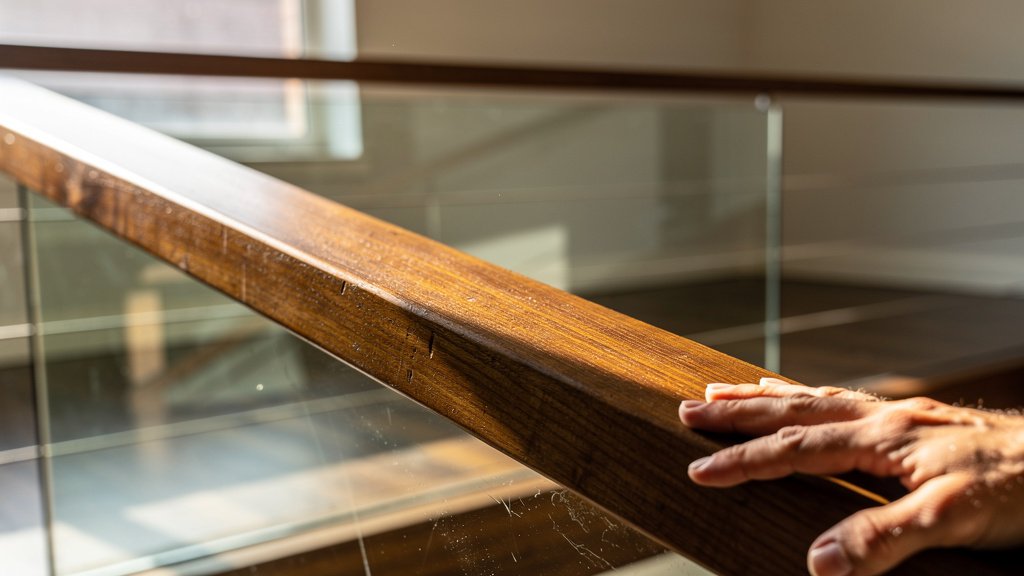
Glass railings have become one of the defining details of modern and transitional home design. The appeal is straightforward: glass creates openness, amplifies natural light, and preserves sightlines in a way no other material can match. When paired with a wooden handrail, glass strikes a balance between warmth and modernity that makes a staircase feel open and inviting rather than closed off.
There are two primary approaches to glass railings. Frameless systems use thick laminated glass panels held in place by minimal hardware often just a base shoe and top cap creating an almost invisible barrier. Framed glass systems use tempered glass panels set into metal or wood frames, which can feel more substantial and traditional while still offering the light-enhancing benefits of glass.
According to Acadia Stairs, glass railings can boost home value by 5-15%, making them an attractive option for homeowners thinking about resale. The cost reflects this premium positioning: expect to pay $200 to $700 per linear foot installed for glass systems, depending on whether you choose framed or frameless configurations.
Metal and Cable Railings
Metal railings whether steel, aluminum, wrought iron, or stainless steel bring durability and a distinct visual edge to staircase design. Black metal railings have become particularly popular in contemporary and industrial-style homes, where they create a sharp contrast against light-colored walls and wood treads.
Cable railing systems represent a specific subset of metal railings that use horizontal or vertical steel cables in place of traditional balusters. The result is an incredibly clean, unobtrusive look that maximizes views and doesn't block light. These systems are especially popular in modern homes where preserving sightlines through the staircase area is a priority.
For coastal environments, stainless steel and aluminum are the smart choices they resist corrosion far better than untreated wrought iron or wood. According to Pacific Wood and Iron, the difference is significant: "Stainless steel and aluminum resist coastal corrosion better than untreated wrought iron or wood," which can mean the difference between a railing that looks great for decades versus one that deteriorates within a few years of salt air exposure.
Mixed-Material Designs
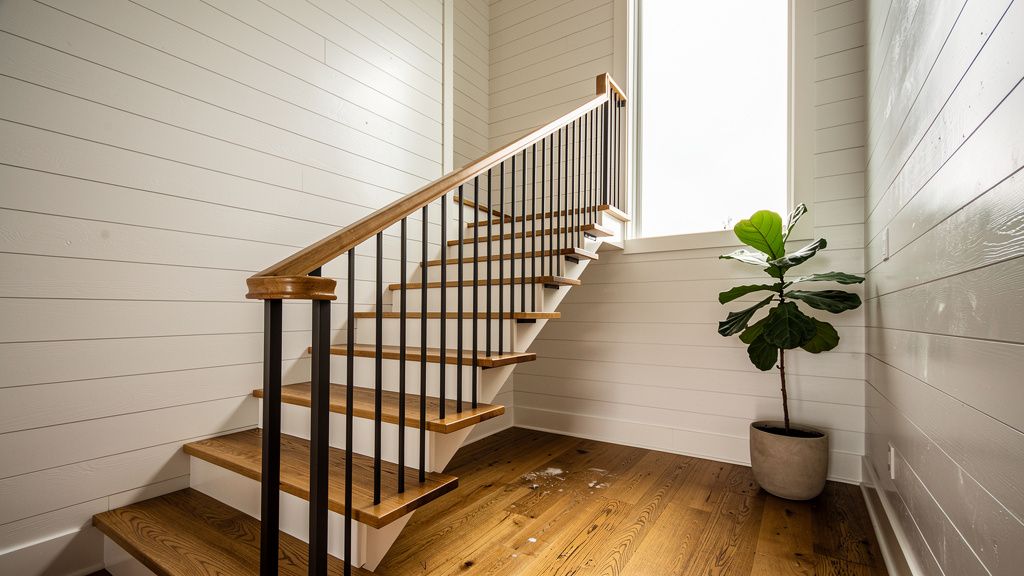
The most interesting indoor railing ideas happening right now involve combining materials. A wooden handrail with black metal balusters, a glass infill panel with a stainless steel frame, or a wood newel post paired with cable infill these combinations give you more design flexibility than any single material offers alone.
The principle is simple: pair a warm material with a cool one, or a solid material with a transparent one. Wood brings warmth and texture; glass brings light and openness; metal brings structure and visual weight. When you combine them thoughtfully, each material does what the other can't, and the result is a railing that feels considered and custom rather than off-the-shelf.
Understanding Building Codes and Safety Requirements
Before diving into design options, it's essential to understand the code requirements that govern indoor railings. These regulations exist to protect your family, and they directly influence what you can and cannot install.
The International Residential Code (IRC) establishes the baseline for residential stair railing requirements across most of the United States. According to the 2021 IRC, handrails must be installed on at least one side of each flight of stairs with four or more risers. The handrail height must be uniform, measuring between 34 and 38 inches above the stair tread nosing or finished surface.
California operates under stricter requirements. The California Building Code mandates that railings on surfaces exceeding 30 inches above the ground must be at least 42 inches in height notably higher than the 36-inch standard found in most other states. This creates unique design challenges for homeowners and builders in California, as Pacific Wood and Iron notes: "California building code requires railings on surfaces exceeding 30 inches above the ground to measure at least 42 inches in height. That's notably higher than the 36-inch requirement found in most other states."
Beyond height, code requirements typically address the spacing of balusters or infill panels (they must prevent a 4-inch sphere from passing through), the strength of the railing assembly, and the grip characteristics of the handrail. If you're working with a professional installer, they'll handle code compliance but it's worth understanding these basics before you start shopping.
Cost Breakdown: What to Expect
Indoor railing costs vary dramatically depending on materials, complexity, and whether you hire a professional or tackle installation yourself. Here's a realistic breakdown based on current market rates.
These figures come from multiple industry sources including Angi, Yelp, Reddit contractor discussions, and specialized railing retailers. A standard 10-foot straight railing will fall at the lower end of these ranges, while curved or multi-flight installations can push costs significantly higher.
Labor typically runs $50 to $150 per hour, with most residential stair railing installations taking 5-10 hours depending on complexity. If you're comfortable with basic carpentry and have the right tools, a straightforward wood railing replacement is a viable DIY project. Glass and custom metal systems almost always require professional installation.
Here's an important consideration for your budget: staircase renovations with a complete railing system cost an average of $19,248 according to industry data from US Lending Company, with an average resale value of $12,464 representing a 64.8% return on investment. That's a meaningful return, and it suggests that a well-chosen railing upgrade pays off not just in daily enjoyment but in home value as well.
Design Trends for 2025
Staircase design in 2025 is defined by simplicity and intentionality. The trend is toward clean lines, clear forms, and designs free of excessive ornamentation. This doesn't mean sterile or cold it means that every element earns its place, and the overall effect is one of effortless sophistication.
Minimalist metal rails are dominating contemporary designs. A single horizontal bar or a simple pair of round metal balusters supporting a sleek handrail creates a look that's both minimal and visually striking. These systems work particularly well in open-plan homes where the staircase is visible from multiple angles and needs to hold its own as a design element.
Black finishes continue to be popular, particularly black iron or black steel paired with wood treads and a natural wood handrail. The contrast is dramatic but grounded the black metal provides visual anchoring while the wood adds warmth. This combination works in modern, industrial, and even transitional interiors.
Horizontal cable systems are gaining ground over traditional vertical balusters. The horizontal cables create a cleaner visual line and are easier to maintain, since there's less surface area for dust to accumulate. They're particularly effective in homes with attractive views that the railing should not obstruct.
What I'm not seeing much of anymore: ornate wrought iron with scrollwork and elaborate curlicues. That aesthetic has its place in traditional homes, but for 2025, the pendulum has swung firmly toward restraint and refinement.
How to Choose the Right Railing for Your Space
Selecting an indoor railing involves balancing aesthetics, budget, maintenance, and your home's existing architecture. Here's a practical framework for making that decision.
Start with your home's overall style. A craftsman bungalow calls for wood railings with warm stains that match the built-ins and window frames. A modern loft with concrete floors and exposed brick pairs beautifully with black metal or cable systems. A transitional home something between traditional and contemporary can often pull off mixed materials, like a wood handrail with glass infill.
Consider who uses the stairs and how. Households with young children may prefer solid infill panels or closely spaced balusters for safety, while empty-nesters might prioritize the sleek look of cables. If someone in your home has mobility challenges, pay extra attention to handrail grip round profiles are generally easier to grasp securely than rectangular ones.
Think about maintenance. Wood railings need periodic refinishing or re-staining, especially in high-traffic areas where hand oils and sunlight can take a toll. Glass panels require regular cleaning to maintain their crystal-clear appearance. Metal railings in most indoor settings are virtually maintenance-free, though you'll want to address any scratches in protective coatings promptly.
Finally, set a realistic budget that accounts for the full project not just materials but also delivery, hardware, professional installation if needed, and any finishing work like patching and paint touch-ups. It's easy to fall in love with a frameless glass system, only to discover that installation costs push it outside your range. Knowing your budget upfront helps you focus on options that are genuinely achievable.
Best Practices and Installation Tips
If you're planning a railing project, a few key practices can mean the difference between a result that looks custom-built and one that looks like a compromise.
- Match existing architectural details. If your home has oak flooring and oak window sills, an oak handrail will feel cohesive. If you have brushed nickel door hardware, consider matching metal finishes rather than mixing.
- Pay attention to proportions. A heavy, substantial handrail can overwhelm a narrow staircase with a low ceiling. Conversely, a too-slim railing in a grand, open foyer can feel underwhelming. Scale matters.
- Plan for lighting. Glass and cable railings behave differently depending on the light in your space. What looks stunning in a north-facing stairwell with abundant natural light may feel stark in a darker interior. Consider how your railing will look at different times of day.
- Don't skip the newel post. The main support post at the bottom (and top, if applicable) of your staircase is a design anchor. A well-turned newel in a traditional home or a chunky metal post in a modern one ties the whole railing together.
- Think about code compliance from the start. If you're designing a custom railing, verify that it meets local code requirements before you order. Fixing compliance issues after installation is expensive and frustrating.
Common Mistakes to Avoid
Homeowners frequently make a handful of predictable errors when selecting and installing indoor railings. Here's how to sidestep them.
The most common mistake is choosing a railing based solely on how it looks in a catalog or showroom, without considering how it will interact with the specific conditions in your home. That sleek cable railing system looks fantastic in a bright, open staircase but in a narrow, windowless stairwell with dark walls, it may read as sparse rather than sophisticated. Always visualize the product in your actual space, ideally by obtaining samples or seeing similar installations in person.
Another frequent error is underestimating total project cost. The materials may fit within budget, but then you discover that your existing staircase needs structural modifications, your walls need blocking for secure mounting, or your stairs need patching and painting where the old railing attached. These hidden costs add up quickly. Get a comprehensive quote that includes everything materials, hardware, labor, and any necessary prep work.
Skipping professional consultation is a gamble that doesn't always pay off. For simple wood handrail replacements on straight stairs, a competent DIYer can handle the job. But for curved stairs, glass systems, or any situation where structural integrity is a concern, the expertise of a professional installer is worth the investment. A poorly installed railing isn't just an eyesore it's a safety risk.
Finally, don't neglect the transition points. Where your indoor railing meets a landing, a wall, or an upper-floor hallway, the details matter. A clean, considered termination rather than a abrupt cutoff or a mismatched transition elevates the entire design.
Key Takeaways
- Indoor railings come in four primary categories: wood, glass, metal/cable, and mixed-material. Each offers a distinct aesthetic and functional profile.
- Building codes require handrails between 34-38 inches in height on stairs with four or more risers. California mandates 42 inches for surfaces 30 inches or more above ground.
- Costs range from $20 per linear foot for basic wood to $700 per linear foot for frameless glass systems, installed.
- Current trends emphasize minimalist metal rails, black finishes, cable systems, and mixed-material combinations.
- Glass railings can increase home value by 5-15%, while full staircase renovations show approximately 65% ROI.
- Choose materials and styles that complement your home's existing architecture rather than fighting against it.
- Professional installation is strongly recommended for glass, custom metal, and curved staircase systems.
Frequently Asked Questions
What is the most durable material for indoor stair railings?
Stainless steel and aluminum are the most durable options, particularly in high-traffic households or coastal environments where corrosion resistance matters. Glass is also extremely durable when properly tempered or laminated it won't warp, rot, or corrode. Wood, while beautiful, requires more maintenance over time and can show wear from daily use.
Can I install a new indoor railing myself, or do I need a professional?
For a straightforward replacement of a wood handrail on a straight staircase with existing mounting points, a confident DIYer can typically handle the job. However, glass systems, custom metal railings, curved or multi-flight staircases, and any project requiring new structural blocking should be left to professionals. The safety stakes are too high for guesswork.
How much does a professional indoor railing installation cost?
Professional installation typically costs $50 to $150 per hour, with most residential projects requiring 5-10 hours of labor. Combined with materials, total project costs range from around $500 for a basic wood railing replacement to $5,000 or more for custom glass or wrought iron systems on complex staircases.
Do indoor railings need to match other metal finishes in my home?
They should relate to them, but exact matching isn't always necessary or even desirable. A brushed nickel handrail may clash with matte black door hardware, but it can look cohesive with brushed nickel light fixtures and cabinet pulls in the same visual zone. Consider the overall finish palette in your entryway and hallway rather than matching one element exactly.
Are glass railings safe for homes with children?
Yes, glass railings are safe when properly installed. Tempered glass is designed to break into small, relatively harmless pieces rather than sharp shards, and laminated glass holds together even when fractured. For households with young children, consider adding a wood or metal handrail at a lower height as a secondary grip point, or choose framed glass systems with more substantial top rails.
What is the standard height requirement for indoor stair railings?
The International Residential Code specifies a handrail height between 34 and 38 inches above the stair tread nosing. This range accommodates comfortable grip for most adults while ensuring adequate safety. Always verify your local code requirements, as some jurisdictions (notably California) have additional or more stringent requirements.
How do I maintain different types of indoor railings?
Wood railings benefit from periodic dusting and occasional polishing with a wood-specific cleaner. Avoid harsh chemicals that can strip finishes. Glass railings need regular cleaning with a streak-free glass cleaner to maintain clarity. Metal railings generally require only dusting and occasional wiping with a damp cloth address any scratches in protective coatings promptly to prevent rust. Cable systems may need periodic tensioning as cables can stretch slightly over time.