How to Get Rid of Moss on Your Roof: A Complete Homeowner's Guide

How to Get Rid of Moss on Your Roof: A Complete Homeowner's Guide
If you've noticed fuzzy green patches spreading across your roof, you're not alone. Moss is a persistent problem for homeowners, particularly those in damp, shaded areas. Left untreated, it can trap moisture against your shingles, damage roofing materials, and lead to expensive repairs. The good news? Getting rid of moss on roof surfaces is a manageable DIY project if you use the right approach.
This guide walks you through everything from understanding why moss grows in the first place to the most effective removal methods and long-term prevention strategies that actually work.
Why Moss Grows on Roofs
Moss is a primitive, flowerless plant with an estimated 12,000 species worldwide, and it thrives in conditions that many homeowners unfortunately provide without realizing it. According to the Oregon State University Extension Service, moss becomes inevitable in moist environments like the Pacific Northwest, where damp conditions combine with shade from trees and structures.
The moss itself doesn't directly damage roof materials it doesn't eat shingles or burrow into them. Instead, it acts as a sponge, trapping soil, debris, and moisture against your roof surface. This extended wet time invites fungi, speeds decomposition, and shortens your roof's lifespan considerably. The roots can also work their way under shingles, loosening granules and causing premature aging.
"You can clean all you want but to keep moss at bay, the environment needs to change. You've got to let the sun in or it will return." Jay Pscheidt, plant pathologist with the Oregon State University Extension Service
Common culprits on residential roofs include Dicranoweisia cirrata and Bryum capillare, both of which flourish in the shaded, moist conditions that many homes provide.
Types of Moss Removal Methods
Removing moss involves several options ranging from gentle manual techniques to chemical treatments. Here's a breakdown of the most common approaches:
Manual Removal
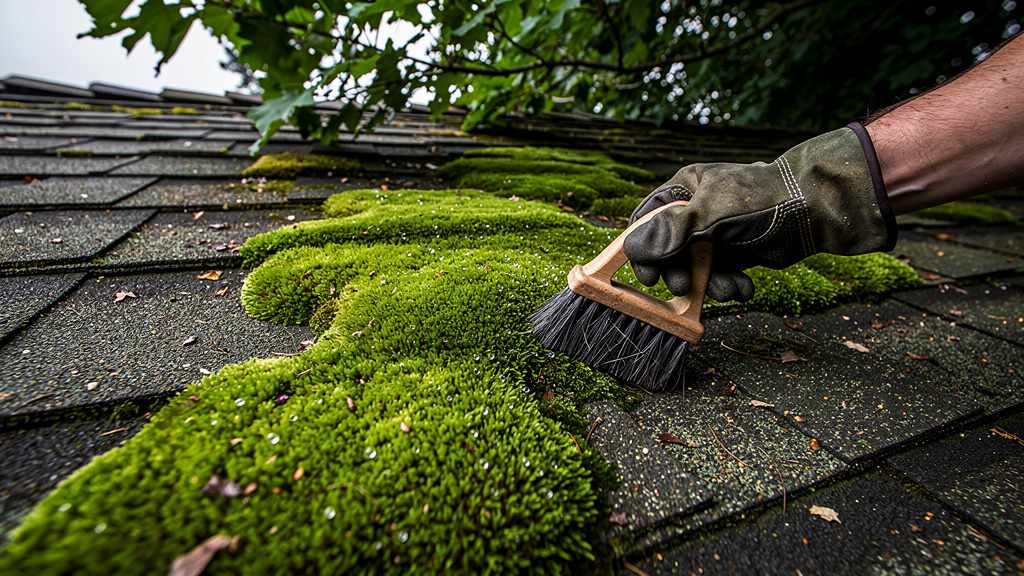
Physical removal is often the first step and involves scrubbing or sweeping the moss off the roof surface. The OSU Extension recommends using a standard bristle scrub brush or stiff broom never a pressure washer, which can strip away the protective gravel layer from shingles and actually shorten your roof's life.
Chemical Treatments
Chemical solutions fall into two categories: kill the moss and wash it away, or kill it in place so it eventually washes off naturally. The Asphalt Roofing Manufacturers Association states that "the most effective method of cleaning algae and moss from a roof is with a 50:50 mix of laundry strength liquid chlorine bleach and water." This solution kills existing growth and helps prevent future outbreaks.
Alternative eco-friendly options include white vinegar solutions, dish soap mixtures, and commercial products containing sodium hypochlorite or other moss-killing compounds.
Prevention Systems
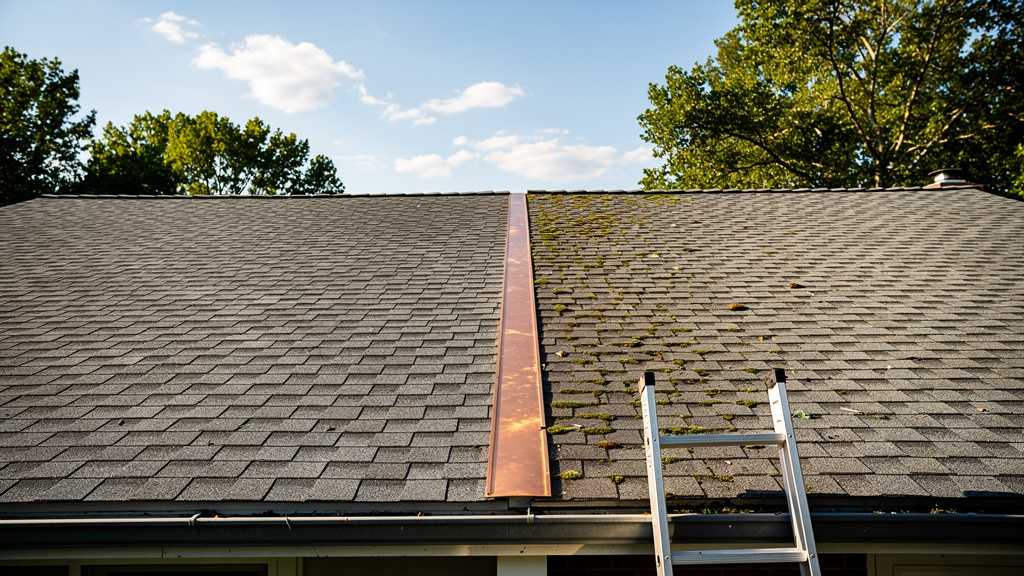
Long-term solutions include installing zinc or copper strips along the roof ridge. When rain washes over these metals, the resulting solution inhibits moss and algae growth. Some homeowners also opt for algae-resistant shingles with embedded copper granules during roof replacement.
How to Remove Moss From Your Roof: Step-by-Step
Follow these steps for safe and effective moss removal:
- Safety first. Moss-covered roofs are slippery. Use a secure harness system if you're working on a steep slope, and consider hiring professionals for multi-story homes.
- Prep the area. Protect landscaping below by covering bushes and plants with tarps bleach and other solutions can damage foliage.
- Remove loose moss. Using a push broom or stiff brush, gently sweep away as much loose moss as possible. Work downward at a shallow angle to avoid lifting shingles.
- Apply treatment. Spray your chosen solution (bleach mixture, vinegar, or commercial product) directly onto remaining moss. Allow it to sit according to product instructions usually 15-30 minutes.
- Rinse gently. Use a garden hose at low pressure directed downward. Never use a pressure washer on asphalt shingles.
- Address prevention. Install zinc strips, trim overhanging branches, and clean gutters to improve airflow and reduce moisture.
The OSU Extension specifically warns against high-pressure devices, noting they "degrade roof quality and longevity by removing some of the gravel layer added to the roofing during the manufacturing process." This damage can void warranties and accelerate deterioration.
Applications and Benefits
Removing moss from your roof isn't just about curb appeal it directly impacts your home's structural integrity and your wallet. Moss that goes untreated can lead to several serious problems:
- Water damage: Trapped moisture can seep under shingles, causing leaks and rot in underlying structures
- Premature aging: The constant moisture environment speeds up shingle deterioration significantly
- Ice dam formation: In winter, moss can contribute to ice dams that force water under shingles
- Reduced property value: A moss-covered roof signals neglect to potential buyers
- Increased energy costs: Damaged shingles reduce insulation efficiency
According to roofing industry experts, moss, lichen, and algae will damage roof materials and shorten their lifespan, massively increasing the costs owners will pay for roof maintenance and care. Addressing moss early saves thousands in potential replacement costs down the line.
Best Practices and Tips
Success with moss removal comes down to technique and consistency. Here are the practices that separate lasting results from temporary fixes:
Timing matters more than you might think. Spring and fall typically offer ideal conditions mild temperatures allow solutions to work effectively without evaporating too quickly, and you can address growth before summer heat or winter ice creates additional problems. Avoid extremely hot days, as treatments can dry before they penetrate properly.
Environmental modification is the key to long-term success. As Pscheidt emphasizes, you've got to let the sun in or the moss will return. Trimming overhanging tree branches to increase sunlight exposure makes a dramatic difference. Combine this with improved gutter drainage and reduced ground-level vegetation near the house.
When applying chemical treatments, more isn't better. Follow dilution instructions carefully concentrated solutions can damage shingles, harm plants, and create runoff problems. Apply on a dry day when no rain is expected for at least 24 hours.
For ongoing maintenance, inspect your roof twice yearly (spring and fall) and address any new growth immediately. Small patches are far easier to treat than established colonies.
Common Mistakes and Misconceptions
Many homeowners inadvertently make the problem worse by following bad advice or taking shortcuts. Here's what to avoid:
Using pressure washers. This is perhaps the most damaging mistake. The high-pressure water blasts away protective granules from asphalt shingles, leaving them vulnerable to sun damage and accelerating decay. What looks like a clean roof is actually a significantly compromised one.
Ignoring the root cause. Cleaning without addressing why moss grows shade, moisture, poor drainage guarantees it will return. The OSU Extension emphasizes that environmental changes are necessary for lasting results.
Waiting too long. Small patches become large colonies quickly. What might be a 15-minute fix today could require hours of work and potential structural repairs next year.
Using wrong chemicals. Some products containing copper, zinc, or iron sulfate require careful application to avoid damaging surrounding vegetation or polluting waterways. The Oregon State University Extension notes that moss killer treatments are short-acting and wash off surfaces during rainfall, so they're not providing long-term control on their own.
Frequently Asked Questions
Will pressure washing damage my roof?
Yes. Pressure washers strip away the protective granule surface on asphalt shingles, significantly shortening their lifespan. The OSU Extension explicitly recommends against using any high-pressure device for moss removal. A garden hose with moderate pressure is sufficient.
How often should I treat my roof for moss?
This depends on your climate and surrounding environment. In damp, shaded areas like the Pacific Northwest, twice-yearly treatment (spring and fall) may be necessary. In sunnier, drier climates, annual treatment or even less frequent attention might suffice.
Are natural remedies like vinegar as effective as bleach?
Vinegar solutions work for light moss growth but are generally less effective than bleach for established colonies. A 50:50 bleach-water solution remains the gold standard according to roofing manufacturers. If you prefer eco-friendly options, look for products specifically formulated for roof use.
Do zinc strips really prevent moss?
Yes, zinc and copper strips are proven effective at preventing moss and algae growth. When installed along the roof ridge, rainwater washes trace amounts of the metal over the roof surface, creating an inhospitable environment for organic growth. Results typically appear within a few months and last for several years.
Can I remove moss myself, or should I hire a professional?
For single-story homes with moderate moss growth and proper safety equipment, DIY removal is feasible. However, if your roof is steep, multiple stories high, heavily infested, or showing signs of structural damage, hiring a professional is strongly recommended. Many roofing companies offer moss removal as part of their services.
What's the difference between moss, algae, and lichen on roofs?
Algae appears as black streaks or discoloration and is primarily a cosmetic issue, though it can lead to lichen. Lichen is a symbiotic organism combining fungi and algae it's often flat and crusty, and more difficult to remove than moss. Moss is the fuzzy green growth most people recognize. All three thrive in moist, shaded conditions and benefit from similar prevention strategies.
Key Takeaways
- Moss traps moisture against shingles, leading to water damage, rot, and premature roof aging that costs thousands in repairs
- The most effective cleaning method is a 50:50 mix of laundry-strength bleach and water, applied with gentle rinsing never use pressure washers
- Long-term prevention requires environmental changes: trim trees to increase sunlight, improve drainage, and consider zinc strips
- Spring and fall are ideal times for treatment; address small patches immediately before they become major infestations
- Professional help is recommended for steep roofs, multi-story homes, or when structural damage is suspected
- Manual removal with a stiff brush should always be the first step before applying any chemical treatment
- Regular inspections and maintenance prevent costly roof replacements and protect your home's value